Your Ultimate Guide to a Self-Drive Safari Across Africa
June 12, 2026The Lemosho Route
June 27, 2026Hike Mount Kilimanjaro on your Self drive 4×4 Safari in East Africa!
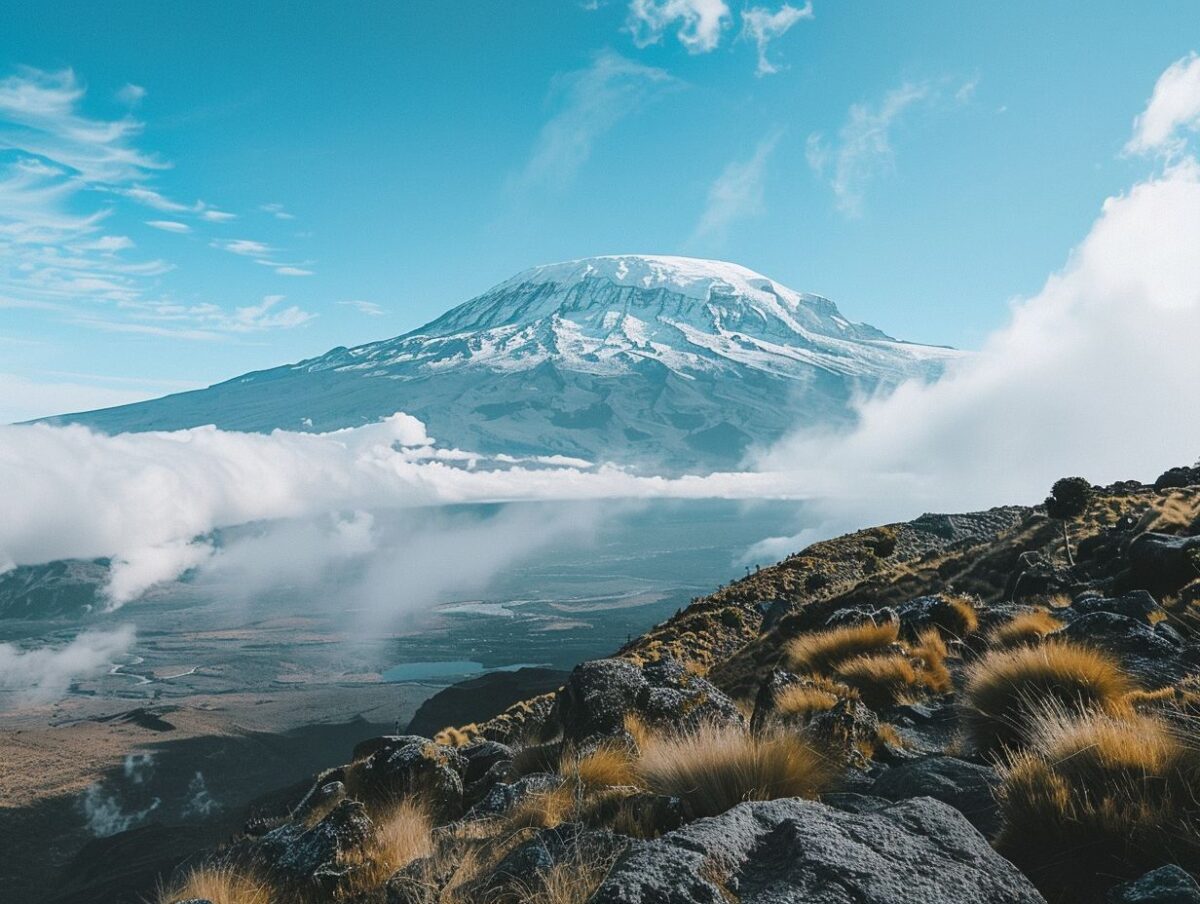
Beautiful views of Mountain Kilimanjaro in Tanzania – East Africa
Mountain Kilimanjaro is a massive volcanic mountain found in northeastern Tanzania and the highest peak in Africa. Rising at an elevation of 5,895 m (19,341 ft) above sea level. At the Uhuru Peak-Africa’s highest point, is renowned for its snow-capped summit, diverse ecological zones, and status as one of the world’s most accessible high-altitude mountains. Mountain Kilimanjaro is also a major symbol of Tanzania and a globally recognized destination for trekking and adventure travel.
Geographic Structure of mountain Kilimanjaro
Mountain Kilimanjaro consists of three volcanic cones: Kibo crater rim, Mawenzi, and Shira. Kibo contains the mountain’s highest point, Uhuru Peak, while Mawenzi and Shira are older extinct volcanic formations. The mountain rises dramatically from surrounding plains, creating one of the largest free-standing mountain masses on Earth. Part of Kilimanjaro National Park, is a UNESCO World Heritage Site.
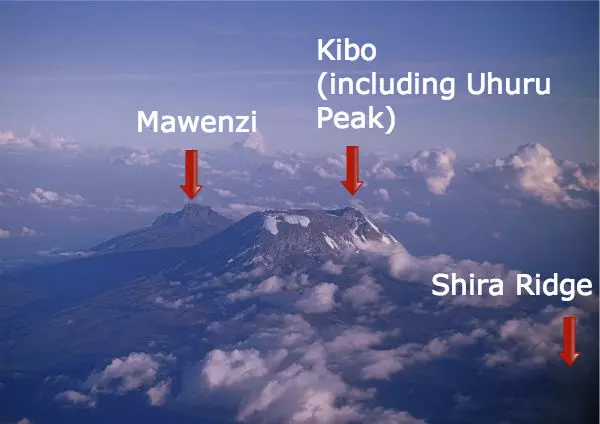
Arial View of mountain Kilimanjaro three Summits
Ecological Zones of mountain Kilimanjaro
The mountain contains several distinct environmental belts stacked by elevation, ranging from cultivated foothills and rain forest to alpine desert and an arctic summit zone. These rapid transitions support diverse wildlife, unique plant communities, and striking landscape changes
The five major ecological zones, each with distinct climate, vegetation, and wildlife. As you climb, the environment changes dramatically because temperature and rainfall vary with altitude. These ecological zones include
Cultivation Zone which is 800–1,800 m / 2,600–5,900 ft, located on the lower slopes. However, dominated by farms growing bananas, coffee, maize, and beans. Home to many villages as well, especially of the Chagga people.
Rain forest Zone which is 1,800–2,800 m / 5,900–9,200 ft is warm, humid, and receives the most rainfall. Has dense forests with tall trees, ferns, mosses, and orchids. Wildlife in this zone includes blue monkeys, black-and-white colobus monkeys, bushbucks, elephants, and many bird species.
Heather and Moorland Zone is 2,800–4,000 m / 9,200–13,100 ft, this zone is cooler with less rainfall. Characterized by shrubs, giant heathers, giant groundsels, and giant lobelias. Mist and strong sunlight are common.
Alpine Desert Zone which is 4,000–5,000 m / 13,100–16,400 ft above sea level, is dry with intense sunlight during the day and freezing temperatures at night. Has sparse vegetation, mainly hardy grasses, lichens, and mosses. Very few animals can survive in this harsh environment.
Arctic Summit Zone rise above 5,000 m / 16,400 ft. Covers the summit area around Uhuru Peak. Extremely cold, windy, and low in oxygen. Almost no plant or animal life. Features glaciers, ice fields, volcanic rock, and seasonal snow.
These zones make Mount Kilimanjaro one of the few places on Earth where you can experience ecosystems ranging from tropical farmland to arctic conditions within a single trek.
Unlike many major peaks, Mountain Kilimanjaro can be climbed without technical mountaineering equipment on standard routes. Success depends largely on acclimatization to altitude rather than climbing skill, and multi-day routes are designed to improve adaptation while passing through the mountain’s varied ecosystems.
Trekking Routes of Mountain Kilimanjaro
Mountain Kilimanjaro has several established climbing routes. They differ in scenery, difficulty, crowd levels, and the amount of time available for acclimatization to the altitude.
1: Marangu Route takes 5–6 days hike, a quite Moderate hiking and the only route with mountain huts also known as the “Coca-Cola Route.” Physically less demanding, but the shorter itinerary can reduce acclimatization time, increasing the risk of altitude sickness.
2: Machame Route is a 6–7 days, this is between moderate to challenging hiking experience, Scenic forests, ridges, and good acclimatization; one of the most popular routes.
3: Lemosho Route this takes 7–8 days relatively moderate with Beautiful scenery, fewer crowds at the start, high summit success due to gradual ascent.
4: Rongai Route with 6–7 days estimate, Moderate and Approaches from the north near the Kenya border; drier and quieter.
5: Shira Route takes about 6–8 days though Challenging, the route starts at a high elevation, making acclimatization more difficult.
6: Northern Circuit Route this takes 8–9 days with moderate and the longest route, least crowded, excellent acclimatization, among the highest summit success rates.
7: Umbwe Route takes 5–6 days and this is very challenging with Steep slopes, direct, and demanding; best suited to experienced, well-acclimatized hikers.
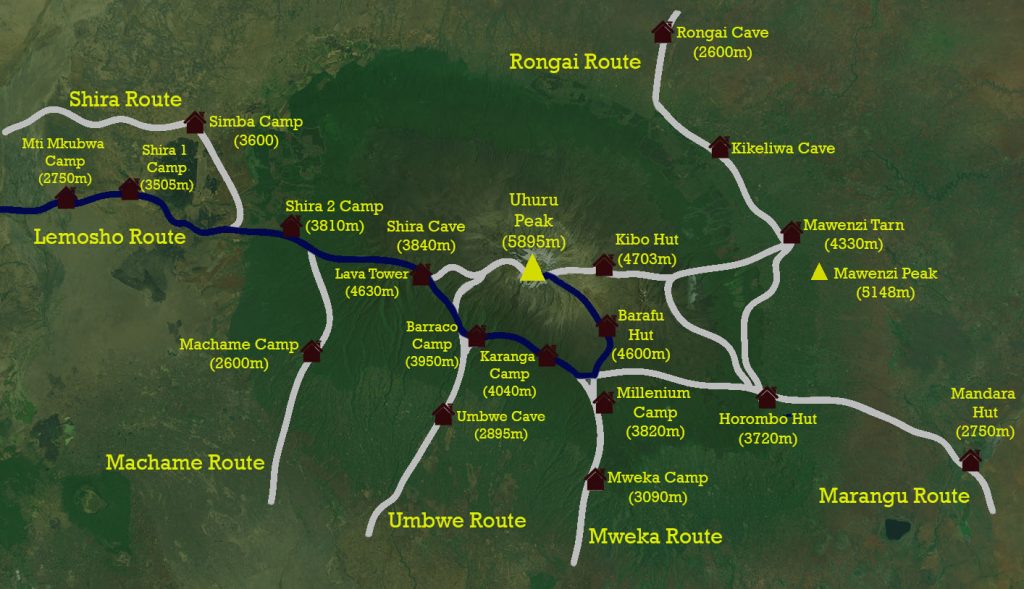
Different Trekking routes to the Mountain Peak
These routes are generally recommended for trekkers with good fitness because they provide more time to adjust to the altitude.
Although Kilimanjaro does not require technical mountaineering skills on its standard routes, reaching the summit still requires good preparation, careful pacing, and adequate acclimatization because altitude sickness is the main obstacle.
Recognition and Conservation
Mountain Kilimanjaro is protected within Kilimanjaro National Park with its Uhuru peak recognized as Africa’s highest point as well as a UNESCO World Heritage Site. The mountain is also an important subject of climate research because its glaciers and ice fields have been shrinking significantly over the past century.
Interesting features
Despite being near the equator, Kilimanjaro’s summit is often covered with ice and snow and Climbers or trekkers have to pass through several climate zones, from rain forest to alpine desert and arctic summit conditions. Mountain Kilimanjaro is one of the world’s most popular trekking mountains because reaching the summit usually requires no technical climbing skills.
The best time to climb Mount Kilimanjaro
The best time is during the dry seasons, when the trails are generally safer, skies are clearer, and summit conditions are more favorable and Best climbing seasons include:
-
January to mid-March
This season has warm temperatures with relatively clear skies. Fewer climbers than during the middle of the year. Good visibility and a higher chance of seeing snow near the summit. Suitable for climbers who prefer quieter trails.
-
June to October which is also a Peak Season
This season is generally characterized by cool, dry weather with excellent visibility. Most popular time to climb. Higher number of climbers, especially on the Machame and Marangu routes. Ideal for first-time climbers due to more predictable weather.
Seasons to avoid climbing Mount Kilimanjaro
1: Long rainy season (March to May)
This has heavy rainfall makes trails muddy and slippery. Also clouds often obscure mountain views making climbing more difficult and less comfortable. The rains this season are heavy in the mountains and characterized with hailstorms.
2: Short rainy season (November to early December)
Lighter rainfall than the long rainy season. Conditions can still be suitable to combine your road-trip adventure with hiking experience, but weather is less predictable.
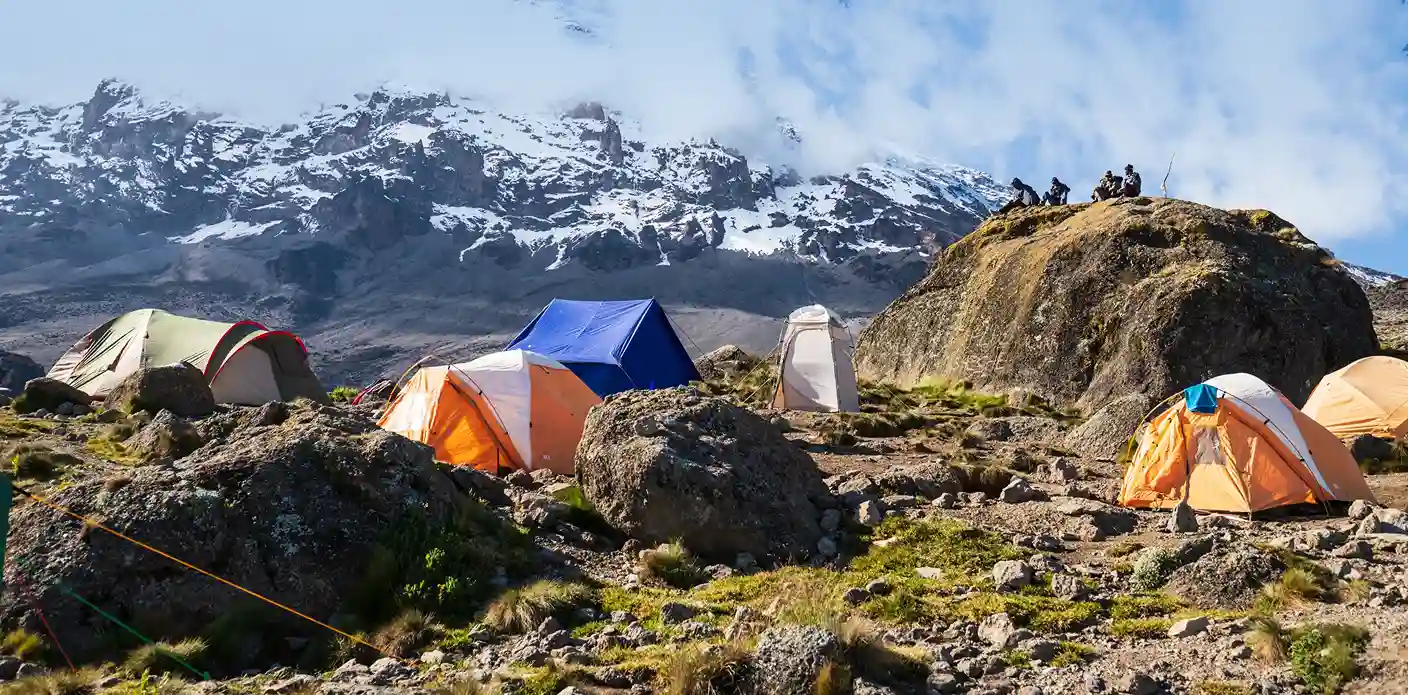
Camping at Mount Kilimanjaro Summit in East Africa
Tips for choosing your climb
If you want the best weather, choose June to October but if you prefer fewer crowds, January to March is an excellent choice. Regardless of the season, allow 7–8 days on the mountain if possible. A longer itinerary gives your body more time to acclimatize to the altitude, which improves your chances of reaching Uhuru Peak safely. The surrounding Chagga people are worth a visit and also act as potters for those climbing Mt Kilimanjaro.
The ideal time depends on whether you prioritize perfect weather, quieter trails, or both, but the two dry seasons consistently offer the best overall climbing experience. For independent safaris to Mount Kilimanjaro or if you’re interest in discovering this part of Africa on your own, you choose to go self drive and its possible to Rent a 4×4 vehicle with a rooftop tent and camping gear for your great safari experience and memories that will last!