
The Shira Route
June 27, 2026The Kibo Crater Rim
June 27, 2026The Marangu Route
Kilimanjaro’s Classic Hut Route to Uhuru Peak
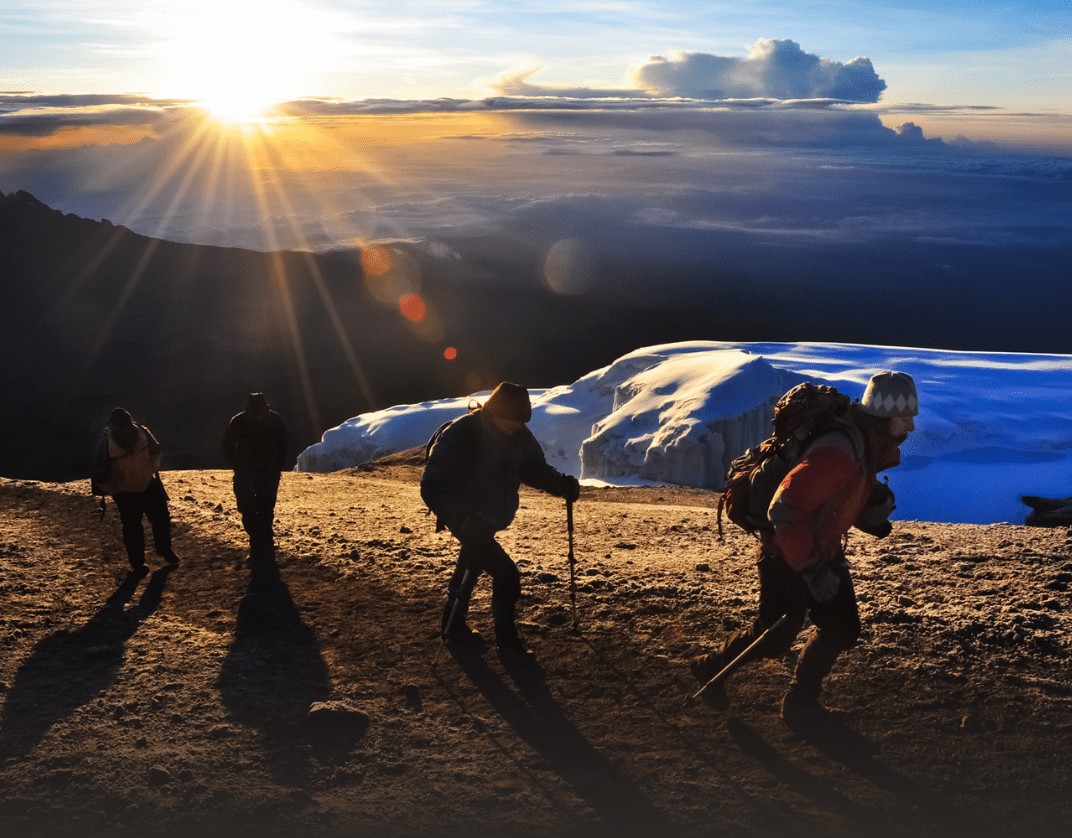
Beautiful sunrise on the Marangu Route, Hiking mt kilimanjaro – Drive East Africa
The Marangu Route is the oldest, most established, and one of the most popular routes for climbing Mount Kilimanjaro, Africa’s highest mountain at 5,895 meters (19,341 feet). Often referred to as the “Coca-Cola Route,” the Marangu Route earned its nickname during the early years of Kilimanjaro tourism when soft drinks and other refreshments were available at some of the mountain huts. Today, the route remains famous not only for its rich history but also for being the only official Kilimanjaro route that provides permanent mountain hut accommodation instead of camping.
Approaching Mount Kilimanjaro from the southeastern side, the Marangu Route offers a relatively straightforward ascent through several of the mountain’s ecological zones, including tropical rain forest, heath and moorland, alpine desert, and the arctic summit zone. Its well-maintained trail, comfortable hut facilities, and established infrastructure make it an attractive choice for climbers seeking a classic Kilimanjaro experience.
Although the Marangu Route is often described as one of the easier routes due to its gradual trail and comfortable accommodations, reaching the summit remains a demanding high-altitude challenge. The primary obstacle is not technical climbing but adapting to the thin air encountered at higher elevations. For this reason, experienced mountain guides generally recommend the six-day itinerary rather than the shorter five-day option, as the additional acclimatization day significantly improves the likelihood of reaching Uhuru Peak successfully.
Route Overview
The Marangu Route begins at Marangu Gate, located on the southeastern slopes of Mount Kilimanjaro within Kilimanjaro National Park. After completing registration and meeting the mountain crew, climbers enter a dense montane rain forest where towering trees, lush vegetation, and diverse wildlife create a spectacular introduction to the expedition.
The trail gradually ascends through the forest before reaching Mandara Hut, the first overnight stop. Along the way, climbers may encounter blue monkeys, black-and-white colobus monkeys, colorful bird species, and a variety of unique plant life that thrives in Kilimanjaro’s humid lower elevations.
On the second day, the trail leaves the rain forest behind and climbs into the heath and moorland zone toward Horombo Hut. As the vegetation becomes more sparse, trekkers are rewarded with increasingly expansive views of Mawenzi Peak and Kibo Peak, Kilimanjaro’s two highest volcanic cones. Giant lobelias and giant groundsels, two of the mountain’s most distinctive alpine plants, become common features of the landscape.
For climbers following the recommended six-day itinerary, an additional acclimatization day is spent at Horombo Hut. During this day, trekkers typically complete a short hike to a higher elevation before returning to the hut to sleep. This “climb high, sleep low” strategy helps the body adapt to decreasing oxygen levels and reduces the risk of altitude sickness during the later stages of the expedition.
After acclimatization, the route continues across the alpine desert toward Kibo Hut, the final overnight stop before the summit attempt. This barren volcanic landscape contrasts sharply with the lush rain forest encountered earlier in the climb, demonstrating the remarkable ecological diversity of Mount Kilimanjaro.
The summit ascent begins shortly after midnight. Climbers make a slow and steady climb toward Gilman’s Point, located on the crater rim at approximately 5,685 meters (18,652 feet). From there, the trail follows the crater edge to Uhuru Peak, the highest point in Africa. Reaching the summit at sunrise provides unforgettable views of Kilimanjaro’s glaciers, volcanic crater, and the vast plains of Tanzania and Kenya.
Following the summit, climbers descend back to Horombo Hut before completing the final descent to Marangu Gate the following day.
Unique Features of the Marangu Route
The Marangu Route is distinguished by its permanent hut accommodation, making it unique among Kilimanjaro’s climbing routes. Rather than sleeping in tents, climbers stay in shared dormitory-style huts equipped with bunk beds, dining facilities, and communal eating areas.
The three main overnight accommodations include:
Mandara Hut – Situated within the rain forest, providing a comfortable introduction to the climb.
Horombo Hut – Located in the moorland zone and serving as the primary acclimatization camp.
Kibo Hut – Positioned in the alpine desert and functioning as the departure point for the summit attempt.
These huts offer greater protection from rain, wind, and cold temperatures than camping, making the Marangu Route particularly attractive during wetter seasons or for trekkers who prefer more structured accommodations.
Another distinctive characteristic is that both the ascent and descent follow the same trail. This simplifies route logistics and makes navigation straightforward. However, it also means climbers retrace much of the same scenery during the descent, unlike routes such as Machame or Lemosho that provide different ascent and descent paths.
Difficulty and Acclimatization
Despite its reputation as one of Kilimanjaro’s easier routes, the Marangu Route should not be underestimated. While the trail itself is well maintained and relatively gentle compared with steeper routes such as Umbwe, the greatest challenge remains the high altitude.
The traditional five-day itinerary gains elevation rapidly, leaving limited time for acclimatization. This increases the likelihood of Acute Mountain Sickness (AMS) and contributes to lower summit success rates than routes with longer itineraries.
For this reason, experienced guides strongly recommend the six-day itinerary. Spending an additional night at Horombo Hut allows the body more time to adjust to the thinner air, significantly improving both comfort and summit success.
Daily hiking times generally range from four to eight hours, depending on the stage of the climb. The exception is summit day, when trekkers typically spend 10 to 14 hours hiking between Kibo Hut, Uhuru Peak, and Horombo Hut.
No technical climbing skills or specialized mountaineering equipment are required under normal weather conditions. However, climbers should be physically fit, mentally prepared, and equipped with appropriate clothing for temperatures that may fall well below freezing during the summit ascent.
Scenery and Wildlife
Although the Marangu Route follows the same path both up and down the mountain, it still offers a remarkable variety of landscapes. Climbers pass through four distinct ecological zones, each with its own climate, vegetation, and wildlife.
The rain forest is home to diverse bird life, blue monkeys, black-and-white colobus monkeys, and dense tropical vegetation. As the climb continues, the landscape gradually transforms into open heath and moorland, characterized by giant lobelias, giant groundsels, and spectacular mountain views.
Higher elevations reveal the stark beauty of the alpine desert, where volcanic rock formations, sparse vegetation, and wide-open landscapes dominate the terrain. Finally, the summit zone presents an arctic environment of glaciers, volcanic scree, ice fields, and panoramic views stretching across northern Tanzania and southern Kenya.
Although routes such as Machame and Lemosho provide greater landscape diversity through different ascent and descent paths, the Marangu Route still offers an impressive cross-section of Kilimanjaro’s unique environments.
Who Should Choose the Marangu Route?
The Marangu Route is particularly well suited to climbers who prefer the comfort and convenience of hut accommodation rather than camping. It is also an excellent choice for those seeking a well-established route with clear trails, reliable infrastructure, and straightforward logistics.
The route is especially suitable for trekkers climbing during the rainy seasons, when enclosed huts provide better protection from wet weather than tents. It also appeals to first-time climbers who value comfortable overnight facilities, provided they choose the recommended six-day itinerary to improve acclimatization.
Conclusion
The Marangu Route remains one of Mount Kilimanjaro’s most iconic and historically significant climbing routes. Its permanent mountain huts, well-maintained trail, and long-standing reputation have made it a favorite among trekkers from around the world for decades.
Although often considered the most comfortable route because of its hut accommodation, the climb to Uhuru Peak is still a serious high-altitude expedition that demands careful preparation, physical fitness, and proper acclimatization. Climbers who choose the six-day itinerary benefit from a significantly higher chance of reaching the summit safely while enjoying the route’s scenic rain forest, volcanic landscapes, and unforgettable sunrise from the roof of Africa.
For adventurers seeking a classic Kilimanjaro experience with comfortable accommodation and a rich mountaineering tradition, the Marangu Route continues to be one of the mountain’s most enduring and rewarding choices.