
The Northern Circuit Route
June 27, 2026The Marangu Route
June 27, 2026The Shira Route:
A Scenic and Challenging Western Approach to Mount Kilimanjaro
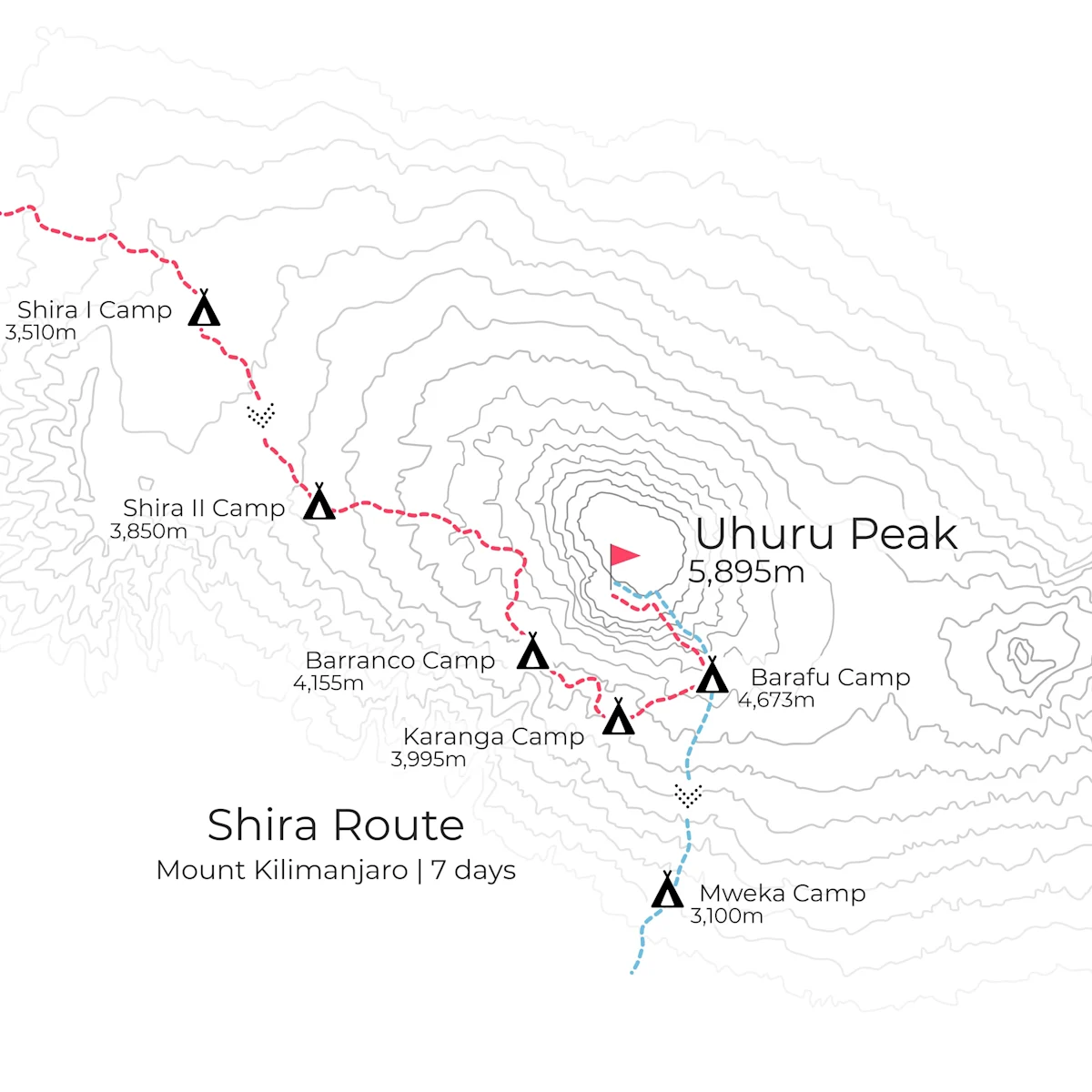
The Shira Route – Mount Kilimanjaro Hiking East Africa
The Shira Route is one of the official trekking routes to the summit of Mount Kilimanjaro and is renowned for its breathtaking scenery, expansive volcanic landscapes, and relatively low number of climbers. Approaching Africa’s highest mountain from the western side, the route offers trekkers an unforgettable journey across the vast Shira Plateau before joining the Southern Circuit and continuing to Uhuru Peak, the highest point on the continent at 5,895 meters (19,341 feet).
Although the Shira Route shares much of its later stages with the popular Lemosho Route, it differs significantly in its starting point. Unlike most Kilimanjaro routes like Northern circuit route, that begin at lower elevations and gradually climb through dense rain forest, the Shira Route starts at a much higher altitude of approximately 3,500 meters (11,500 feet). This unique characteristic provides spectacular mountain views from the outset but also presents a greater acclimatization challenge. For this reason, the route is generally recommended for physically fit trekkers with some previous high-altitude hiking experience or those choosing a longer itinerary to allow sufficient time for altitude adaptation.
Combining remarkable scenery, quieter trails, and a rewarding summit experience, the Shira Route remains an attractive option for climbers seeking a less crowded but physically demanding ascent of Mount Kilimanjaro.
Route Overview
The adventure begins with a scenic drive from Moshi or Arusha to Londorossi Gate, where climbers complete registration and park formalities. From there, a four-wheel-drive vehicle transports trekkers to the Shira Gate or a nearby trailhead located on Shira Ridge. Unlike the Lemosho Route, which starts at a much lower elevation in montane rain forest, the Shira Route begins above the forest zone, allowing climbers to immediately experience Kilimanjaro’s dramatic high-altitude landscapes.
The first day’s hike traverses the expansive Shira Plateau, one of the world’s largest high-altitude volcanic plateaus. Formed thousands of years ago when one of Kilimanjaro’s original volcanic cones collapsed, the plateau now stretches across the western slopes of the mountain, providing sweeping panoramic views of Kibo Peak, Mount Meru, and the surrounding plains of northern Tanzania.
As the expedition progresses, the route merges with the Lemosho Route near Shira Camp. From this point onward, climbers follow the Southern Circuit, one of Kilimanjaro’s most scenic traverses. This section includes several iconic landmarks that have become highlights of the mountain.
Among these is the Lava Tower, an impressive volcanic rock formation rising to approximately 4,630 meters (15,190 feet). Many itineraries use this stage to implement the highly effective “climb high, sleep low” acclimatization strategy. Climbers ascend to the Lava Tower during the day before descending to a lower camp for the night, encouraging the body to adjust to reduced oxygen levels more efficiently.
The route then continues into the picturesque Barranco Valley before ascending the famous Barranco Wall. Although the wall appears steep from below, it is a straightforward scramble rather than a technical climb. With careful footing and guidance from experienced mountain guides, most trekkers negotiate this section comfortably while enjoying spectacular views across the southern glaciers and surrounding valleys.
Beyond Barranco Camp, the trail passes through the Karanga Valley before reaching Barafu Camp, the final overnight stop before the summit attempt. Here climbers rest briefly before beginning the ascent to Uhuru Peak around midnight. The summit climb is the most physically demanding stage of the expedition, requiring determination, endurance, and mental resilience as trekkers ascend through freezing temperatures and thin mountain air. Reaching Uhuru Peak at sunrise rewards climbers with unforgettable views of Kilimanjaro’s glaciers, volcanic crater, and the vast East African plains below.
Following the summit, climbers descend via the Mweka Route, passing through alpine desert, heathland, and eventually lush rain forest before exiting the national park at Mweka Gate.
Difficulty and Acclimatization
Although the Shira Route does not involve technical mountaineering or rock climbing under normal weather conditions, it is widely regarded as one of Kilimanjaro’s more challenging trekking routes. The principal reason is its unusually high starting elevation.
Most Kilimanjaro routes begin below 2,000 meters, allowing trekkers to spend one or two days gradually adapting to increasing altitude. In contrast, the Shira Route begins at approximately 3,500 meters, meaning climbers are exposed to thinner air almost immediately after leaving the vehicle. Because the body has little opportunity to acclimatize before reaching high elevations, some trekkers may experience symptoms of Acute Mountain Sickness (AMS) during the first stages of the climb.
To reduce this risk, many experienced tour operators recommend seven- or eight-day itineraries rather than shorter six-day schedules. The additional days provide more opportunities for gradual altitude adaptation and significantly improve summit success rates.
The hiking itself is moderately strenuous rather than technically difficult. Daily trekking distances typically range between five and eight hours, depending on the itinerary and weather conditions. The terrain varies considerably throughout the climb, including rocky trails, alpine desert, volcanic ridges, and occasional steep sections such as the Barranco Wall.
The summit push remains the most demanding portion of the expedition. Climbers usually depart around midnight from Barafu Camp and spend several hours ascending slowly toward Stella Point before continuing to Uhuru Peak. The combination of darkness, freezing temperatures, strong winds, and low oxygen levels makes this stage mentally and physically challenging, even for experienced hikers.
Scenic Highlights
One of the greatest strengths of the Shira Route is its extraordinary scenic diversity. Because the route begins high on the western slopes, trekkers enjoy expansive mountain panoramas almost immediately after setting out.
The Shira Plateau is widely considered one of Kilimanjaro’s most spectacular natural features. Its broad volcanic plains are dotted with unique alpine vegetation, including giant groundsels and giant lobelias, while dramatic views of Kibo Peak dominate the eastern skyline.
As the expedition progresses, the landscape transforms through multiple ecological zones. Climbers pass through heath and moorland before entering the stark beauty of the alpine desert, where volcanic rock formations, sparse vegetation, and wide-open vistas create an almost lunar landscape. Near the summit, glaciers, ice fields, and volcanic scree provide a dramatic contrast to the lush environments encountered at lower elevations.
Because the Shira Route receives fewer climbers during its early stages than the more popular Machame and Marangu routes, trekkers often enjoy a quieter and more peaceful wilderness experience. Photographers, wildlife enthusiasts, and nature lovers particularly appreciate the route’s wide-open views and opportunities for uninterrupted landscape photography.
Who Should Choose the Shira Route?
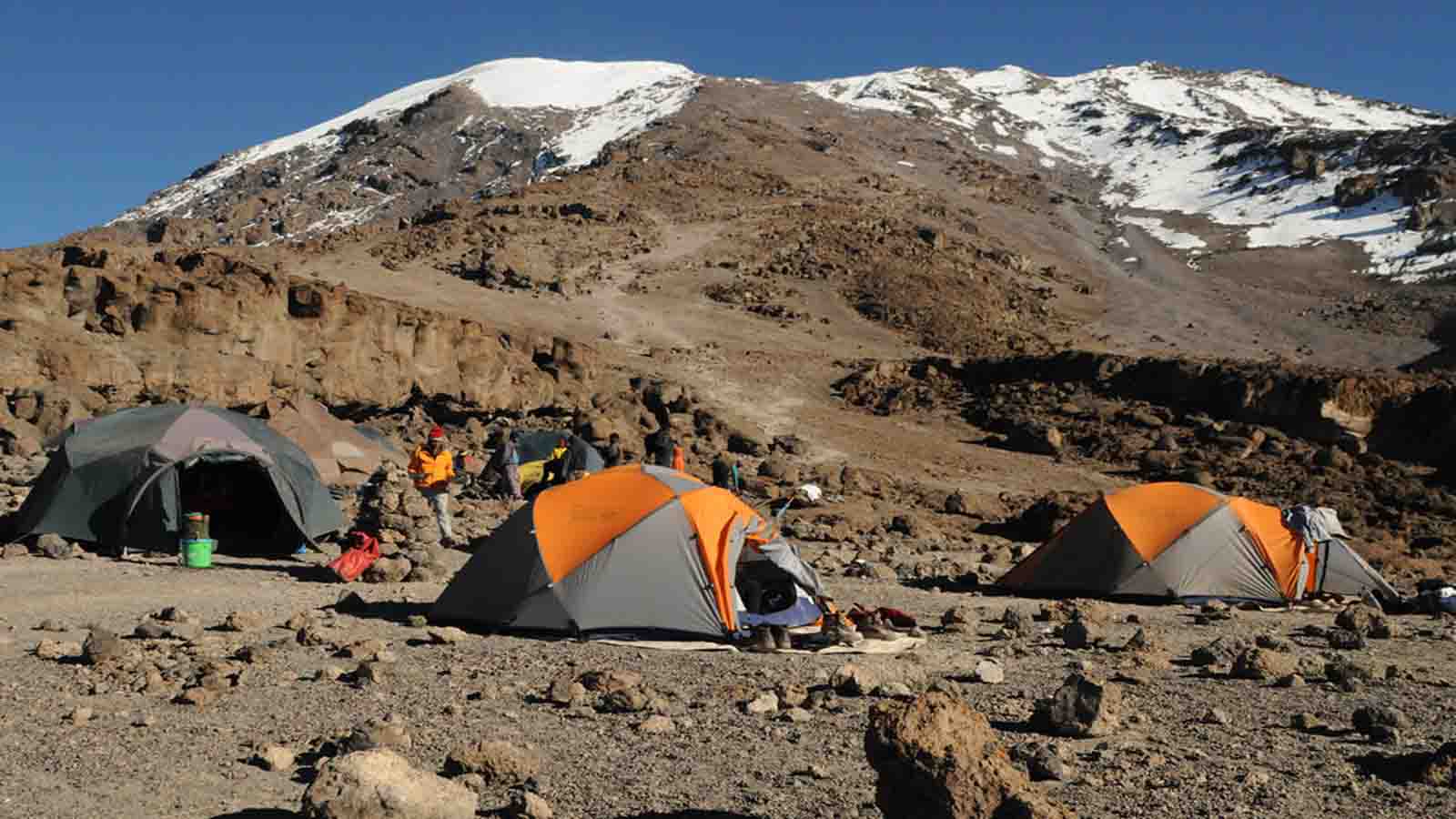
The Shira trail -Hiking Mount Kilimanjaro in East Africa
The Shira Route is best suited to trekkers on East Africa Road-trip adventure who value spectacular scenery and are prepared to manage the challenges associated with starting at a high altitude. It is an excellent option for experienced hikers who have previously trekked at moderate elevations or for fit adventurers seeking a quieter alternative to Kilimanjaro’s busiest routes.
The route is also well suited to climbers who prioritize panoramic landscapes over the gentlest acclimatization profile. By selecting a seven- or eight-day itinerary, most trekkers can significantly improve their ability to adapt to the altitude while still benefiting from the route’s exceptional scenery.
Practical Considerations
Prospective climbers should understand that weather conditions on Mount Kilimanjaro can change rapidly regardless of the season. Temperatures may range from warm conditions during the day to well below freezing on summit night. Proper preparation, including layered clothing, quality hiking boots, and appropriate cold-weather gear, is essential for a safe and comfortable expedition.
Although the Shira Route is generally less crowded than several of Kilimanjaro’s classic routes during its early stages, it eventually joins the Lemosho and Machame routes along the Southern Circuit. Consequently, trail traffic increases during the latter half of the climb. Nevertheless, many trekkers appreciate the quieter beginning and the opportunity to experience the expansive Shira Plateau before merging with other climbing groups.
Conclusion
The Shira Route offers one of the most scenic and rewarding approaches to Mount Kilimanjaro. Its dramatic volcanic landscapes, expansive high-altitude plateau, and panoramic mountain views provide an unforgettable trekking experience from the very first day. While its high starting elevation makes acclimatization more demanding than on many other routes, climbers who choose a longer itinerary and prepare adequately can enjoy a safe and successful ascent.
For experienced hikers, adventurous trekkers, and those seeking a quieter western approach with exceptional scenery, the Shira Route remains one of Kilimanjaro’s most distinctive and memorable climbing options. Combining natural beauty, geological significance, and the challenge of Africa’s highest mountain, it delivers an extraordinary journey that culminates at the iconic summit of Uhuru Peak.