
The Lemosho Route
June 27, 2026The Shira Route
June 27, 2026Northern Circuit Route:
Kilimanjaro’s Longest and Most Successful Summit Route
The Northern Circuit Route is the longest and one of the most rewarding trekking routes on Mount Kilimanjaro. Renowned for its exceptional acclimatization profile, low trail traffic, and outstanding summit success rates, it has become a preferred choice for climbers seeking a comprehensive and less crowded experience on Africa’s highest mountain. Unlike the more traditional routes that ascend and descend along the mountain’s southern slopes, the Northern Circuit makes an extensive loop around Kilimanjaro, allowing trekkers to experience remote landscapes, diverse ecosystems, and spectacular panoramic views before reaching Uhuru Peak at 5,895 meters (19,341 feet).
Introduced as one of Kilimanjaro’s newest official routes, the Northern Circuit was designed to maximize acclimatization while showcasing parts of the mountain that few climbers have the opportunity to explore. Its longer itinerary allows participants to ascend gradually, significantly reducing the risk of altitude sickness and improving their chances of successfully reaching the summit. Although it requires more time and a larger financial investment than shorter routes, many experienced guides and trekkers consider the Northern Circuit to be the finest all-around route on Mount Kilimanjaro.
Route Overview
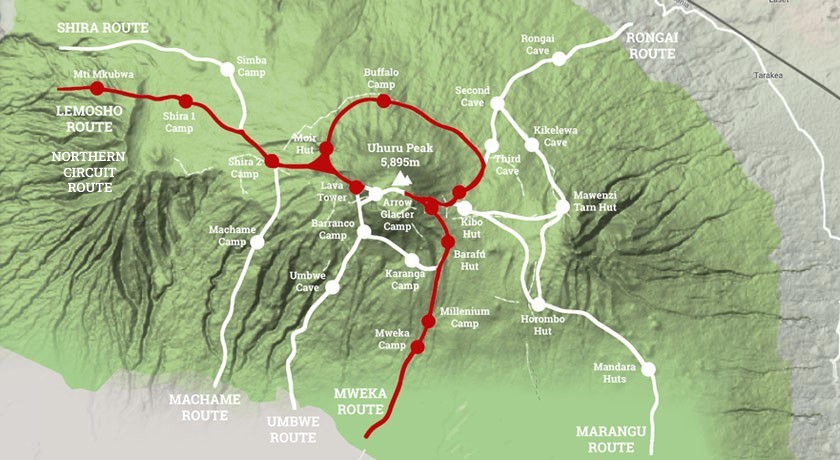
The Northern Circuit Route Best for Mount Kilimanjaro hiking – East Africa
The Northern Circuit begins at Londorossi Gate on the western side of Mount Kilimanjaro. During the first two days, the route follows the same trail as the popular Lemosho Route, passing through dense montane rain forest before emerging onto the spectacular Shira Plateau. This section offers an excellent introduction to Kilimanjaro’s diverse ecosystems, with lush forests gradually giving way to open heathlands and expansive volcanic landscapes.
As the climb progresses across the Shira Plateau, trekkers enjoy sweeping views of Kibo Peak and the surrounding plains. The trail then reaches the Lava Tower, a prominent volcanic rock formation located at approximately 4,630 meters (15,190 feet). Many itineraries use this stage to practice the important acclimatization strategy of “climb high, sleep low,” allowing climbers to spend time at higher elevations before descending to camp for the night.
Unlike the Lemosho and Machame routes, which continue around Kilimanjaro’s southern side, the Northern Circuit turns north after the Lava Tower. From this point onward, trekkers leave the busier climbing routes behind and enter one of the mountain’s most remote and peaceful regions.
The trail circles the northern slopes beneath Kibo Peak, offering uninterrupted views across the Kenyan plains. This section of the mountain receives relatively few visitors, allowing climbers to experience Kilimanjaro in a quieter and more secluded environment. The remote camps, open landscapes, and wide mountain vistas create a wilderness experience that differs significantly from the busier southern approaches.
Eventually, the route connects with the Rongai Route near School Hut, the final camp before the summit attempt. Climbers begin their ascent to Uhuru Peak shortly before midnight, reaching the summit around sunrise after several hours of steady climbing through cold temperatures and thin mountain air.
Following a successful summit, the descent continues via the Mweka Route on Kilimanjaro’s southern side, providing trekkers with the opportunity to experience yet another distinct section of the mountain before exiting through Mweka Gate.
Exceptional Acclimatization
The greatest advantage of the Northern Circuit Route is its outstanding acclimatization profile. Altitude sickness remains the primary reason many climbers fail to reach the summit of Mount Kilimanjaro, making proper acclimatization one of the most important factors in a successful expedition.
Most Northern Circuit itineraries last nine days, although some operators offer eight-day express versions or extended ten- and eleven-day itineraries. The additional days allow climbers to gain elevation gradually while spending more time at moderate and high altitudes. This slow and carefully planned ascent gives the body an opportunity to adapt naturally to decreasing oxygen levels, reducing the likelihood of Acute Mountain Sickness (AMS).
Numerous experienced guides recommend the Northern Circuit for climbers who prioritize safety and summit success over completing the climb as quickly as possible. Because of its gradual elevation profile, the route consistently records some of the highest summit success rates of any Kilimanjaro route.
Scenic Diversity
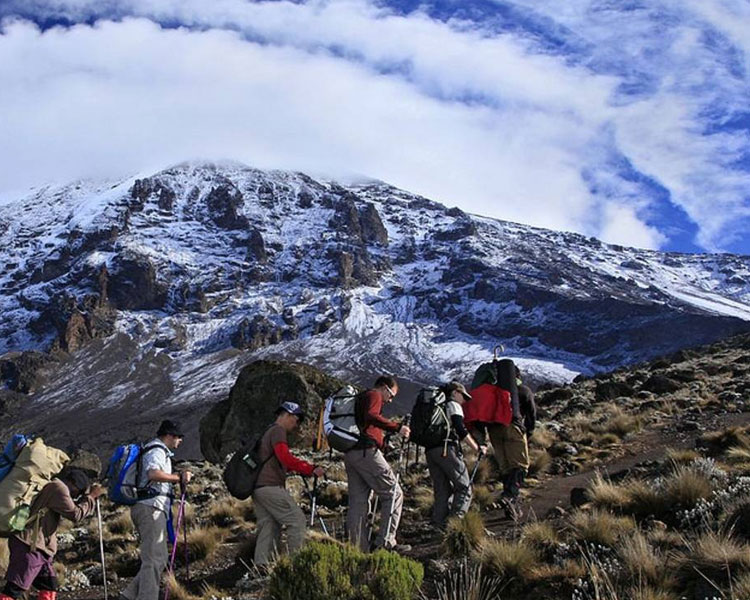
Beautiful views of Mount Kilimanjaro while on the Northern Circuit Route – East Africa
One of the defining characteristics of the Northern Circuit is its remarkable variety of landscapes. Over the course of the trek, climbers pass through nearly every ecological zone found on Mount Kilimanjaro.
The journey begins in dense tropical rain forest, home to towering trees, moss-covered vegetation, colorful birds, and occasional sightings of blue monkeys and black-and-white colobus monkeys. As elevation increases, the landscape transitions into heath and moorland, where giant lobelias and giant groundsels dominate the scenery.
Higher still, trekkers enter the alpine desert, an environment characterized by rocky terrain, volcanic formations, and sparse vegetation adapted to harsh conditions. Finally, the summit zone presents an arctic landscape of glaciers, volcanic rock, ice fields, and breathtaking views stretching across Tanzania and Kenya.
The Northern Circuit’s unique path around the mountain provides perspectives unavailable on other routes, making it especially attractive to photographers and nature enthusiasts.
Difficulty and Physical Demands
Although the Northern Circuit is not considered the steepest or most technically demanding route on Mount Kilimanjaro, it remains a physically challenging trek. No technical climbing skills or mountaineering equipment are required under normal weather conditions, but climbers should be prepared for consecutive days of hiking over varied terrain.
Daily walks typically last between five and eight hours, depending on the itinerary and terrain, while summit day is considerably longer. The final ascent usually begins around midnight and may involve 10 to 15 hours of hiking before reaching the next overnight camp after the summit.
Success on the Northern Circuit depends primarily on physical fitness, mental determination, proper pacing, hydration, and effective acclimatization rather than climbing experience. Individuals with good cardiovascular fitness and a willingness to walk at a slow, consistent pace generally perform well on the route.
Practical Considerations
The Northern Circuit’s longer duration makes it one of the more expensive Kilimanjaro routes. Additional park fees, camping nights, guide and porter wages, food supplies, and logistical support all contribute to higher overall costs compared with shorter itineraries.
However, many climbers consider the additional expense to be a worthwhile investment. The extended schedule provides more opportunities for acclimatization, greater comfort during the climb, fewer crowds, and a significantly higher probability of reaching the summit successfully.
Because the route remains relatively uncrowded, campsites are generally quieter and less congested than those found along the more popular Machame and Marangu routes. This peaceful atmosphere enhances the overall trekking experience and allows climbers to appreciate the mountain’s natural beauty in a more tranquil setting.
Why Choose the Northern Circuit?
The Northern Circuit is widely regarded as one of the best routes for climbing Mount Kilimanjaro because it successfully combines outstanding scenery, gradual acclimatization, and exceptional summit success rates. Its extended itinerary enables trekkers to experience nearly every ecological zone on the mountain while exploring remote northern slopes that remain largely untouched by heavy tourist traffic.
Although it requires more time and a higher financial commitment, the rewards are substantial. Climbers benefit from quieter trails, spectacular panoramic views, diverse landscapes, and one of the safest ascent profiles available on Kilimanjaro. For those seeking a comprehensive trekking experience with the greatest possible opportunity to reach Uhuru Peak safely and enjoyably, the Northern Circuit stands as one of the finest choices on Africa’s highest mountain. Vehicle rental companies like Drive East Africa ltd can hire you a 4×4 Car rental with a driver guide to travel cheap and enjoy this adventure of a lifetime.