A UNESCO World Heritage Site – Kilimanjaro National Park
June 27, 2026Mount Kenya Africa’s Second Highest Mountain
June 28, 2026Explore Chagga People of Mount Kilimanjaro: Guardians of Tanzania’s Mountain Heritage
The Chagga people are among Tanzania’s most prominent and culturally rich ethnic groups, renowned for their deep historical connection to the fertile slopes of Mount Kilimanjaro. For centuries, they have lived on the mountain’s southern and eastern foothills, developing a sophisticated agricultural system, vibrant cultural traditions, and a way of life shaped by one of Africa’s most iconic landscapes. Today, the Chagga community plays a vital role in the cultural identity of the Kilimanjaro region, contributing significantly to tourism, conservation, and the local economy surrounding Kilimanjaro National Park. A UNESCO World heritage site
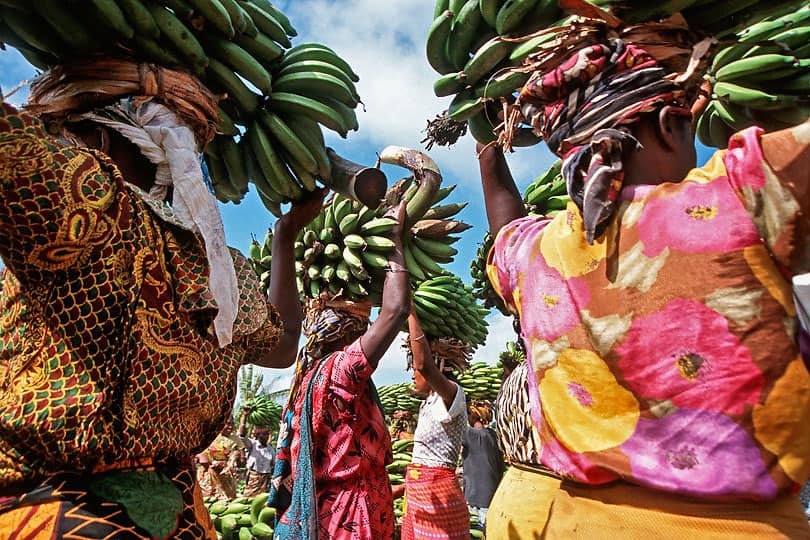
Chagga People carrying Food
For many visitors, climbing Mount Kilimanjaro is only part of the experience. Exploring the culture, traditions, and hospitality of the Chagga people offers a deeper understanding of the mountain, and the communities that have called it home for generations. From traditional coffee farms and ancient irrigation systems to historic caves and vibrant local markets, Chagga culture provides an enriching complement to any visit to northern Tanzania.
Historical Background
The origins of the Chagga people date back several centuries, with their ancestors believed to have migrated to the slopes of Mount Kilimanjaro from different regions of East and Central Africa. Over time, these communities settled on the mountain’s fertile volcanic slopes, where abundant rainfall, rich soils, and reliable water sources created ideal conditions for agriculture.
Historically, the Chagga were organized into a number of independent chiefdoms, each governed by its own local ruler. These chiefdoms developed distinct identities while sharing common language, customs, and agricultural practices. Trade with neighboring communities flourished, and the fertile environment around Mount Kilimanjaro enabled the Chagga to establish one of the most prosperous agricultural societies in East Africa.
During the colonial era, the region underwent significant political and economic changes. Despite these transformations, the Chagga retained many of their cultural traditions and remain one of Tanzania’s most influential ethnic communities today.
Life on the Slopes of Mount Kilimanjaro
The lives of the Chagga people have always been closely connected to Mount Kilimanjaro. The mountain provides fertile volcanic soils, dependable rainfall, and abundant freshwater streams originating from its forests and glaciers. These natural resources have supported generations of farming families and shaped the region’s economy.
Most Chagga villages are located between 900 and 1,800 meters above sea level, where the climate is ideal for agriculture. Traditional homesteads are surrounded by lush gardens filled with banana trees, coffee plants, vegetables, fruit trees, and medicinal plants.
This integrated farming system has long been recognized as one of Africa’s most sustainable agricultural landscapes. By cultivating multiple crops together beneath a canopy of banana trees, Chagga farmers maintain soil fertility, conserve moisture, and maximize productivity throughout the year.
Agriculture and Coffee Farming
Agriculture remains the foundation of Chagga society. Bananas are the most important staple crop and play a central role in daily life, local cuisine, and cultural ceremonies. The fruit is eaten fresh, cooked into traditional dishes, or fermented to produce Mbege, a locally brewed banana beer that is served during celebrations and social gatherings.
Coffee cultivation has also become an essential part of the regional economy. Introduced during the late nineteenth century, Arabica coffee thrives in Kilimanjaro’s cool climate and fertile volcanic soils. Today, the region produces some of Tanzania’s highest-quality coffee, much of which is exported to international markets.
Many visitors participate in coffee tours that take them through family-owned farms, where they learn about traditional cultivation methods, harvesting, roasting, grinding, and brewing. These experiences not only highlight the importance of coffee to the local economy but also provide direct support to community-based tourism initiatives.
Traditional Culture and Customs
The Chagga possess a rich cultural heritage expressed through music, dance, storytelling, craftsmanship, and ceremonial traditions. Community life places great emphasis on family, cooperation, and respect for elders, values that continue to shape daily life despite increasing modernization.
Traditional dances accompanied by rhythmic drumming are performed during weddings, harvest festivals, and cultural celebrations. Songs often celebrate community achievements, historical events, and the beauty of Mount Kilimanjaro, reflecting the close relationship between the people and their environment.
Storytelling has historically played an important role in preserving history, passing on moral lessons, and strengthening community identity. Oral traditions remain an important aspect of Chagga culture and continue to be shared with younger generations.
The Chagga Language
The Chagga people speak several closely related dialects collectively referred to as Kichagga, alongside Swahili, Tanzania’s national language. While Swahili is widely used in education, business, and government, Kichagga remains an important symbol of cultural identity within local communities.
The continued use of traditional languages helps preserve cultural knowledge, oral history, and customs that have been passed down through generations.
Ancient Irrigation Systems
One of the most remarkable achievements of the Chagga people is the development of an extensive irrigation network. Long before modern engineering techniques were introduced, Chagga communities constructed a sophisticated system of canals that diverted water from mountain streams to their farms.
These gravity-fed channels distributed fresh water across cultivated fields, enabling year-round agriculture even during dry seasons. Many of these traditional irrigation systems remain in use today and are considered outstanding examples of indigenous environmental management and sustainable farming practices.
The Chagga Caves
Among the most fascinating cultural attractions near Mount Kilimanjaro are the historic Chagga caves. These underground tunnel systems were constructed several centuries ago as defensive shelters during periods of conflict between neighboring chiefdoms and raids by outside groups.
Built beneath villages and concealed by vegetation, the caves provided secure hiding places for families, livestock, and food supplies. Narrow entrances, interconnected chambers, and strategic escape routes demonstrate the ingenuity of their builders.
Today, several restored cave complexes are open to visitors, offering valuable insight into the region’s history and the resilience of the Chagga people.
The Chagga and Kilimanjaro Tourism
The Chagga community plays an essential role in Tanzania’s tourism industry. Many mountain guides, porters and accompany treakkers to Uhuru peak , cooks, and support staff employed on Mount Kilimanjaro originate from Chagga villages surrounding the national park.
Their extensive knowledge of the mountain’s weather, trails, wildlife, vegetation, and cultural history contributes significantly to the safety and success of climbing expeditions. The hospitality and professionalism of Chagga guides have earned international recognition and are often cited as one of the highlights of the Kilimanjaro experience.
Community-based tourism initiatives also allow visitors to explore coffee plantations, waterfalls, traditional homes, cultural museums, and local markets, creating additional economic opportunities while preserving cultural heritage. for more independent travelers and want a kilimanjaro experience can a decide to hire a 4×4 car with a Rooftop Tent to maximally explore the entire region on their pace.
Conservation and Sustainable Living
For generations, the Chagga people have depended on Mount Kilimanjaro’s forests for clean water, fertile soils, and favorable climatic conditions. As a result, many local communities actively support conservation efforts that protect the mountain’s ecosystems.
Community organizations work alongside conservation authorities to promote sustainable agriculture, forest restoration, watershed protection, and responsible tourism. These initiatives help preserve the natural environment while ensuring that future generations continue to benefit from the mountain’s resources.
As climate change increasingly affects Mount Kilimanjaro’s glaciers and water supplies, the role of local communities in environmental stewardship has become more important than ever.
Visiting Chagga Communities
A visit to a Chagga village offers travelers an opportunity to experience authentic Tanzanian culture beyond the famous mountain trails. Guided cultural tours often include visits to coffee farms, traditional homes, underground caves, local markets, waterfalls, and family-run restaurants serving regional cuisine.
Visitors can participate in coffee-making demonstrations, taste traditional dishes, learn about local customs, and engage directly with community members. These experiences foster meaningful cultural exchange while supporting sustainable tourism and local livelihoods.
In a Conclusion
The Chagga people are far more than the inhabitants of Mount Kilimanjaro’s foothills—they are the custodians of a remarkable cultural and agricultural heritage that has flourished alongside Africa’s highest mountain for centuries. Their deep connection to the land, innovative farming practices, rich traditions, and enduring hospitality have helped shape the identity of the Kilimanjaro region and continue to enrich the experience of visitors from around the world.
Whether climbing Mount Kilimanjaro, exploring traditional coffee farms, discovering ancient underground caves, or learning about centuries-old customs, visitors gain a greater appreciation for the people whose lives have been intertwined with this magnificent mountain for generations. The story of the Chagga people is one of resilience, sustainability, and cultural pride, making them an essential part of any journey to Kilimanjaro National Park and northern Tanzania.