
The Kibo Crater Rim
June 27, 2026Kilimanjaro National Park
June 27, 2026Uhuru Peak -The Roof of Africa and the Highest Point on Mount Kilimanjaro
Rising to 5,895 meters (19,341 feet) above sea level, Uhuru Peak is the highest point on Mount Kilimanjaro and the highest elevation on the African continent. Situated on Kibo Crater rim, the summit represents the ultimate goal for thousands of climbers who travel to Tanzania each year to conquer Africa’s tallest mountain. As the highest peak on the continent, Mount Kilimanjaro is one of the prestigious Seven Summits, making Uhuru Peak one of the world’s most sought-after trekking destinations.
More than a geographical landmark, Uhuru Peak is a symbol of determination, resilience, and personal achievement. Reaching its summit requires physical endurance, careful acclimatization, and mental strength, rewarding climbers with breathtaking views, a profound sense of accomplishment, and the unforgettable experience of standing on the “Roof of Africa.”
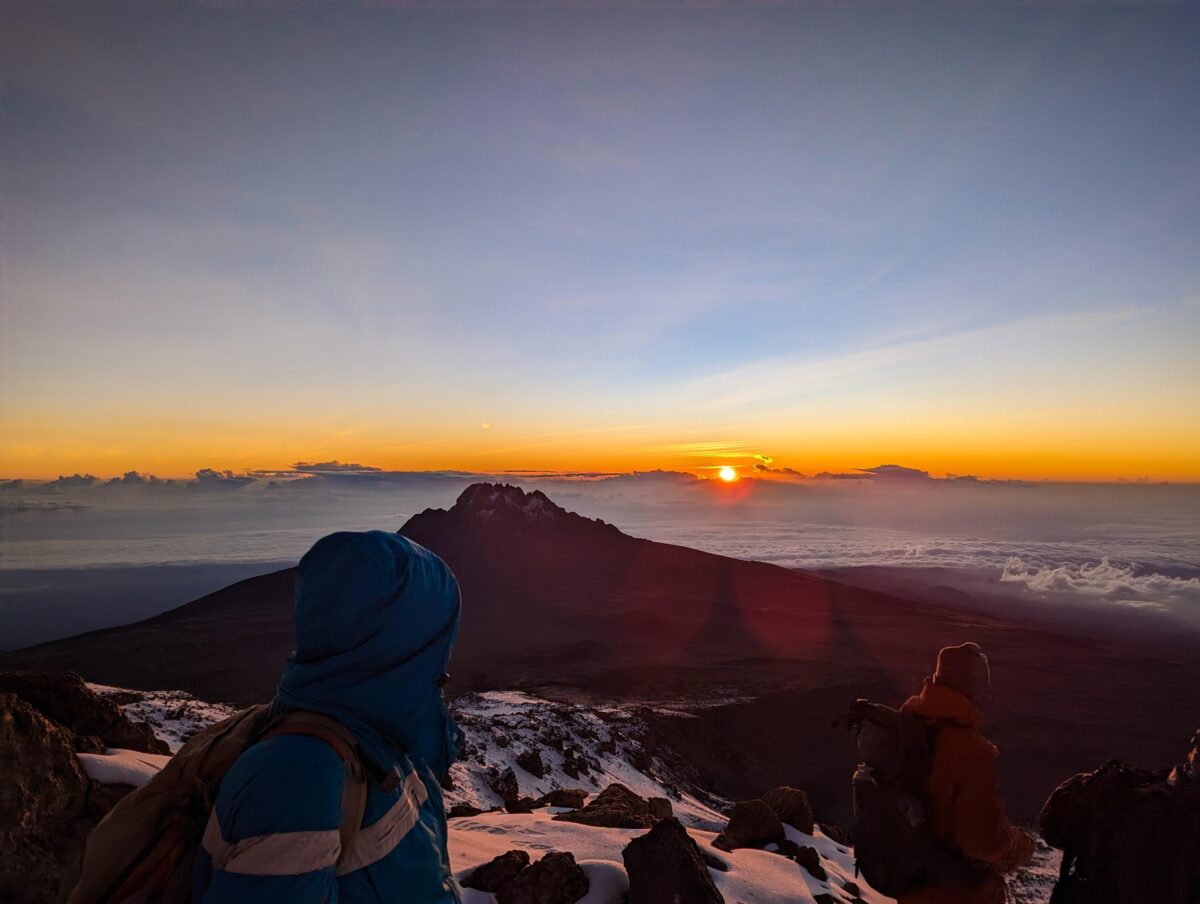
Amazing views from summit uhuru-peak kilimanjaro Tanzania East Africa
The Meaning Behind Uhuru Peak
The word “Uhuru” means “freedom” in Swahili, reflecting Tanzania’s rich cultural heritage and history. The summit was officially named Uhuru Peak in 1961 to commemorate the independence of Tanganyika, now part of the United Republic of Tanzania. Since then, the name has become synonymous with freedom, national pride, and the spirit of exploration.
Today, climbers from every corner of the world journey to Uhuru Peak not only to reach Africa’s highest point but also to experience one of the most iconic mountain adventures on Earth.
Location and Geological Significance
Uhuru Peak is located on Kibo, the highest and youngest of Mount Kilimanjaro’s three volcanic cones. The mountain itself is composed of three distinct volcanic formations—Shira, Mawenzi, and Kibo—which were created by volcanic activity over millions of years. While Shira and Mawenzi are extinct volcanoes, Kibo remains a dormant stratovolcano, retaining minor geothermal activity beneath its surface.
The summit is positioned along the western section of the Kibo Crater Rim, overlooking the expansive summit crater and the mountain’s dramatic volcanic landscape. From this vantage point, climbers are treated to sweeping panoramic views that extend across northern Tanzania, southern Kenya, and the vast East African plains.
One of the most remarkable aspects of Uhuru Peak is its alpine environment. Despite being located only a few degrees south of the equator, the summit experiences freezing temperatures year-round and is surrounded by glaciers, volcanic rock formations, and permanent ice fields. This striking contrast between equatorial latitude and arctic conditions makes Mount Kilimanjaro one of the world’s most unique mountains.
Routes to Uhuru Peak
Several official trekking routes lead to Uhuru Peak, each offering a distinct climbing experience in terms of scenery, acclimatization, and difficulty. The most popular routes include:
Lemosho Route – Celebrated for its exceptional scenery, gradual acclimatization, and high summit success rate.
Machame Route – Known as the “Whiskey Route,” offering spectacular landscapes and a moderately challenging ascent.
Marangu Route – The only route featuring mountain hut accommodation rather than camping.
Northern Circuit Route – The longest route on Kilimanjaro, providing excellent acclimatization and quieter trails.
Rongai Route – The only route approaching from the northern side of the mountain near the Kenyan border.
Shira Route – A scenic western approach that begins at a relatively high elevation.
Umbwe Route – The shortest and steepest route, recommended primarily for experienced climbers.
Although each route differs in terrain, duration, and overall experience, they all converge near the summit, leading climbers toward Uhuru Peak via either Stella Point or Gilman’s Point on the crater rim.
The Final Summit Ascent
For most climbers, the summit attempt begins shortly after midnight from either Barafu Camp or Kibo Hut, depending on the chosen route. Hiking under the light of headlamps, climbers ascend slowly through freezing temperatures and increasingly thin air.
The ascent to the crater rim is widely regarded as the most physically demanding stage of the expedition. Steep volcanic scree, low oxygen levels, and accumulated fatigue require climbers to maintain a slow and steady pace while following the guidance of experienced mountain guides.
Upon reaching Stella Point or Gilman’s Point, the steep climb gradually gives way to a gentler traverse along the Kibo Crater Rim. Although this final section is less demanding in terms of gradient, the high altitude continues to make each step physically challenging. Most climbers arrive at Uhuru Peak shortly after sunrise, when the surrounding glaciers and volcanic landscape are illuminated by the golden morning light.
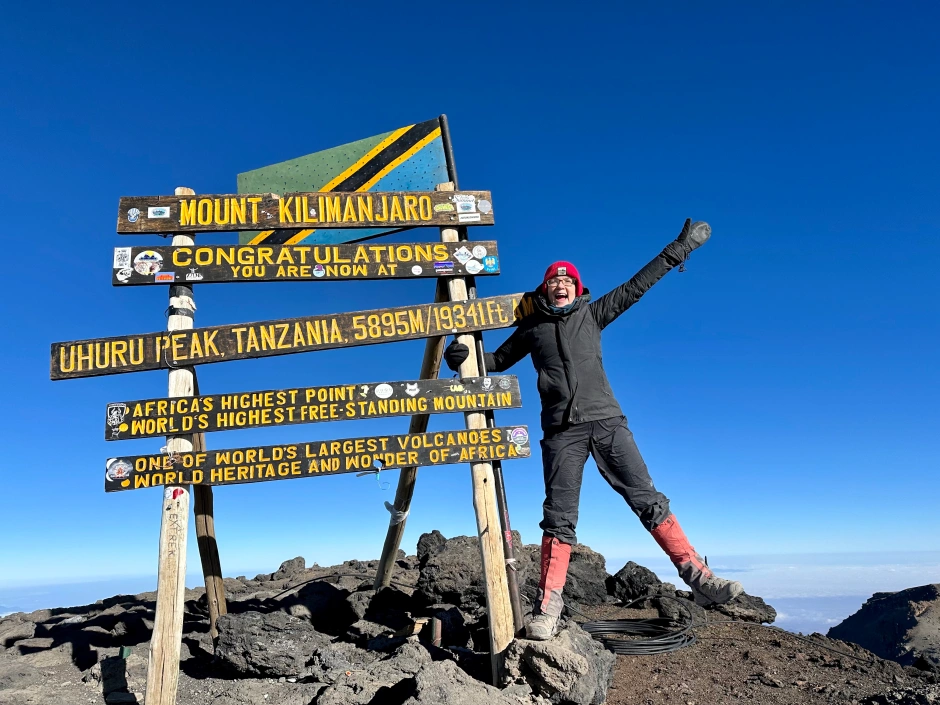
Amazing Uhuru-peak on Mount Kilimanjaro – East Africa
The Summit Experience
Standing on Mount Kilimanjaro’s Uhuru Peak is widely regarded as one of the most rewarding life achievements of any Africa Safari adventure travel. After several days of trekking through Mount Kilimanjaro’s diverse ecological zones—from tropical rain forest and heathlands to alpine desert and arctic summit terrain—reaching the highest point in Africa is both an emotional and unforgettable experience. The communites around that mainly consist of chagga people are hired as potters. The summit is marked by the iconic wooden sign bearing the inscription:
“Congratulations, you are now at Uhuru Peak, at 5,895 m (19,341 ft) above sea level, Africa’s Highest Point, World’s Highest Free-Standing Mountain.” and this is Mountain Kilimanjaro
For many climbers, taking a photograph beside this sign represents the culmination of years of planning, preparation, and determination.
On clear days, the summit offers breathtaking panoramic views across Kibo Crater rim, the Ash Pit, the mountain’s remaining glaciers, and the expansive plains of Tanzania and Kenya. Watching the sunrise from above the clouds is often described as one of the defining moments of the Kilimanjaro experience.
Climate and High-Altitude Conditions
Although Mount Kilimanjaro rises from tropical lowlands, conditions at Uhuru Peak are distinctly alpine. Summit temperatures typically range between -20°C and -7°C (-4°F to 19°F) during the night, while strong winds can make the environment feel even colder.
In addition to freezing temperatures, climbers are exposed to intense ultraviolet radiation during daylight hours and significantly reduced atmospheric oxygen. At the summit, oxygen levels are approximately half those found at sea level, making even simple physical activities considerably more strenuous.
Appropriate clothing, insulated footwear, layered garments, gloves, hats, and quality cold-weather equipment are essential for a safe and comfortable summit attempt.
Altitude and Acclimatization
Altitude presents the greatest challenge when climbing to Uhuru Peak. Unlike technical mountaineering expeditions, climbing Kilimanjaro does not require ropes or specialized climbing equipment under normal conditions. Instead, success depends largely on effective acclimatization.
As elevation increases, the reduced oxygen concentration places greater demands on the body. Common symptoms of altitude sickness include headaches, nausea, dizziness, fatigue, and shortness of breath. Climbers who ascend too quickly are at greater risk of developing more serious altitude-related illnesses.
For this reason, longer itineraries of seven to nine days are generally recommended. These schedules provide additional time for gradual acclimatization, allowing the body to adapt naturally to the changing altitude. Maintaining a slow pace, staying well hydrated, consuming sufficient calories, and carefully following the advice of professional guides all contribute significantly to a successful summit.
Glaciers and the Changing Summit Landscape
One of Uhuru Peak’s defining characteristics is its proximity to Mount Kilimanjaro’s remaining glaciers, including the Rebmann Glacier, Furtwängler Glacier, and the extensive Northern Ice Fields. These ancient ice formations have covered parts of Kibo’s summit for thousands of years and create one of the mountain’s most recognizable landscapes.
However, scientific research has documented a significant decline in the size of these glaciers over recent decades due to climate change, reduced snowfall, and changing atmospheric conditions. While the glaciers continue to provide a dramatic backdrop for summit photographs, their gradual retreat underscores the importance of conserving one of Africa’s most unique mountain environments.
Why Uhuru Peak Is an Extraordinary Destination
Uhuru Peak is more than simply the highest point in Africa—it is a destination that embodies adventure, perseverance, and natural wonder. The journey to the summit takes climbers through five distinct ecological zones, showcasing an extraordinary diversity of landscapes rarely found on a single mountain. From lush equatorial rain forest and giant alpine plants to barren volcanic deserts and glacial ice fields, Mount Kilimanjaro offers an unparalleled trekking experience.
The summit itself represents the culmination of days of physical effort, careful preparation, and mental resilience. Standing above the clouds at 5,895 meters, surrounded by glaciers and volcanic landscapes, is an experience that leaves a lasting impression on every climber.
Conclusion
Uhuru Peak stands as one of the world’s most iconic mountain summits and the highest point on the African continent. Rising from the slopes of the dormant Kibo volcano, it combines remarkable geological history, extraordinary natural beauty, and profound cultural significance. Every successful ascent is a testament to determination, endurance, and the enduring appeal of exploration.
Whether approached via the scenic Lemosho Route, the historic Marangu Route, the remote Northern Circuit, or any of Kilimanjaro’s other established trails, the journey culminates at the same unforgettable destination. Watching the sunrise from Uhuru Peak, standing beside the famous summit sign, and gazing across the vast landscapes of East Africa is an experience that few will ever forget.
For adventurers seeking one of the world’s greatest trekking achievements, Uhuru Peak remains the ultimate destination—a place where personal ambition meets the highest point in Africa, creating memories that last a lifetime.