
The Chagga People of Mount Kilimanjaro
June 27, 2026Mount Kenya National Park and Forest Reserve
June 28, 2026Mount Kenya: A Natural Wonder of Kenya’s Highest Mountain
Standing majestically at 5,199 meters (17,057 feet) above sea level, Mount Kenya is the highest mountain in Kenya and the second-highest peak in Africa after Mount Kilimanjaro. Rising from the heart of central Kenya, this extinct stratovolcano is a place of extraordinary natural beauty, rich cultural significance, and exceptional biodiversity. Surrounded by lush forests, alpine meadows, glacial valleys, and dramatic rocky peaks, Mount Kenya has long been regarded as one of East Africa’s most remarkable natural landmarks.
Protected within Mount Kenya National Park and Forest Reserve, a UNESCO World Heritage Site, the mountain attracts hikers, mountaineers, wildlife enthusiasts, photographers, and nature lovers from around the world. While its towering peaks present a rewarding challenge for experienced climbers, its lower slopes and scenic trekking routes offer unforgettable adventures for hikers of varying abilities.
Beyond its spectacular scenery, Mount Kenya holds profound cultural importance for the communities that live around its slopes. Its forests provide vital water resources, its fertile soils support thriving agriculture, and its landscapes continue to inspire local traditions that have endured for centuries.
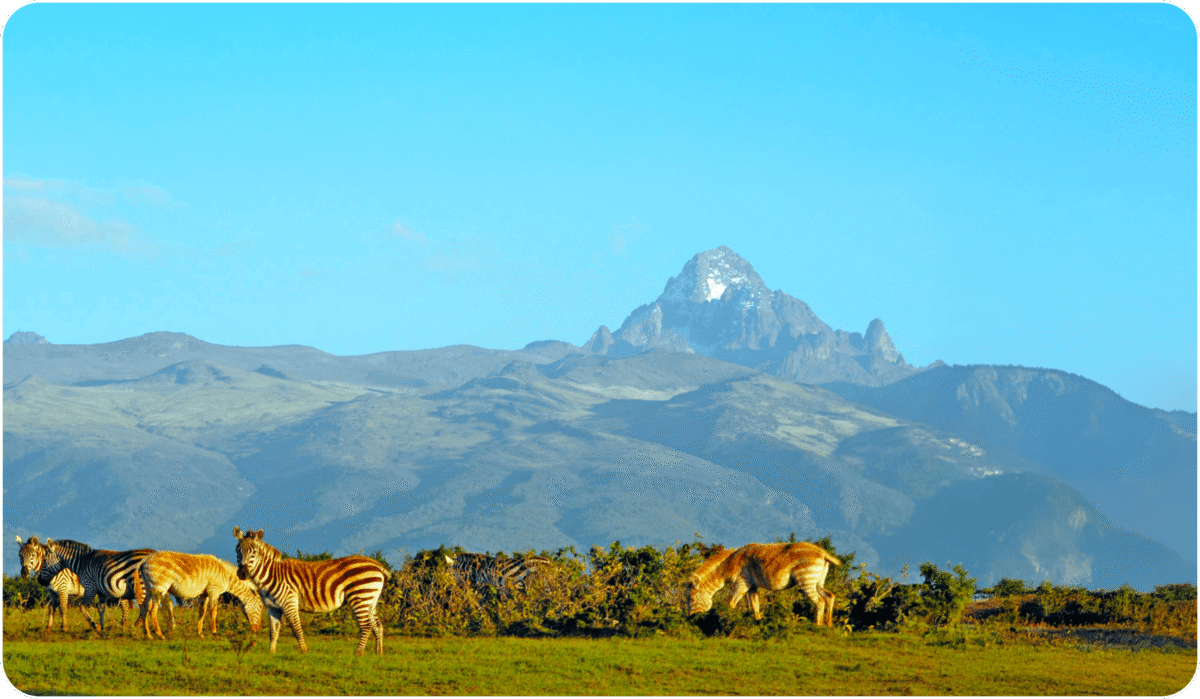
Mt Kenya national park Safari drive
History of Mount Kenya
Mount Kenya was formed approximately three million years ago through a series of volcanic eruptions associated with the development of the East African Rift System. During its active period, the volcano is believed to have risen to well over 6,500 meters, making it significantly taller than it is today. Millions of years of erosion, glaciation, and weathering gradually sculpted the mountain into its present form, creating the rugged peaks, deep valleys, and dramatic cliffs that define its landscape.
Long before European explorers arrived, Mount Kenya was revered by indigenous communities as a sacred mountain. For the Kikuyu, Kenya’s largest ethnic group, the mountain is known as Kirinyaga, meaning “Place of Brightness” or “Mountain of Whiteness,” a reference to its snow-covered summit. According to Kikuyu traditions, the supreme deity Ngai resides on the mountain, making it a place of spiritual importance and reverence.
The mountain was first documented by European explorer Johann Ludwig Krapf in 1849. His reports of an equatorial mountain covered in snow were initially met with skepticism, but subsequent expeditions confirmed the existence of one of Africa’s most remarkable peaks.
Today, Mount Kenya remains a symbol of Kenya’s natural heritage and an internationally recognized destination for conservation, scientific research, and adventure tourism.
Geography and Natural Features
Located approximately 150 kilometers northeast of Nairobi, Mount Kenya dominates the landscape of central Kenya. The mountain forms the centerpiece of Mount Kenya National Park, which covers more than 700 square kilometers, while the surrounding forest reserve protects one of East Africa’s most important water catchment areas.
Mount Kenya consists of several distinct volcanic peaks, with Batian (5,199 m) standing as the highest, followed by Nelion (5,188 m) and Point Lenana (4,985 m). Batian and Nelion are steep, jagged rock towers that require technical climbing skills, whereas Point Lenana is accessible through trekking and is the summit reached by the majority of visitors.
The mountain’s landscape reflects millions of years of glacial activity. Deep U-shaped valleys, glacial lakes, tarns, waterfalls, and rugged granite ridges create one of Africa’s most spectacular alpine environments. Although Mount Kenya still possesses several glaciers, these have been shrinking rapidly due to climate change.
Ecological Diversity
Mount Kenya is renowned for its extraordinary biodiversity. As visitors ascend the mountain, they pass through a series of ecological zones, each characterized by unique vegetation and wildlife.
The lower slopes are covered by dense montane forests dominated by cedar, podocarpus, olive, bamboo, and camphor trees. These forests provide habitat for African elephants, Cape buffaloes, bushbucks, giant forest hogs, black-and-white colobus monkeys, and numerous bird species.
Above the forest lies a zone of bamboo and heath land, followed by the famous Afro-alpine moorlands. This ecosystem is home to giant groundsels, giant lobelias, everlasting flowers, and other plants specially adapted to extreme high-altitude conditions.
The upper mountain transitions into alpine desert before reaching the rocky summit zone, where glaciers, cliffs, and snowfields dominate the landscape.
The Highest Peak: Batian
At 5,199 meters (17,057 feet), Batian is the highest point on Mount Kenya and the second-highest summit in Africa. Named after a respected Maasai leader, Batian is a steep granite peak requiring advanced mountaineering techniques, including rock climbing, rope work, and technical equipment.
Adjacent to Batian stands Nelion, slightly lower at 5,188 meters. Both peaks are popular objectives for experienced climbers seeking one of Africa’s most rewarding technical ascents.
For most visitors, however, Point Lenana serves as the principal hiking summit. At 4,985 meters (16,355 feet), it offers spectacular sunrise views and can be reached without technical climbing, making it the most accessible high-altitude summit on the mountain.
Hiking Mount Kenya
Mount Kenya is one of Africa’s premier trekking destinations, offering a variety of routes that cater to both experienced hikers and first-time high-altitude trekkers. Unlike technical climbs to Batian and Nelion, hiking to Point Lenana requires no specialized climbing skills, making it an attractive alternative for travelers seeking a challenging yet achievable mountain adventure.
The three most popular hiking routes are:
Sirimon Route, known for its gradual ascent, scenic valleys, and excellent acclimatization profile.
Chogoria Route, celebrated for its breathtaking landscapes, including waterfalls, alpine lakes, and dramatic cliffs.
Naro Moru Route, the shortest and most direct route to Point Lenana, often chosen by trekkers with limited time.
Most hiking expeditions take three to five days, allowing sufficient time for acclimatization while exploring the mountain’s diverse landscapes.
Tourism Importance
Mount Kenya is one of Kenya’s most valuable tourism assets, attracting thousands of international and domestic visitors annually. Adventure tourism associated with hiking, mountaineering, camping, wildlife viewing, photography, and bird watching contributes significantly to the country’s economy.
The mountain also supports eco-tourism initiatives that promote conservation while creating employment opportunities for local communities. Professional guides, porters, lodge operators, transport providers, and cultural tourism enterprises all benefit from the steady flow of visitors including 4×4 adventure road-trips to this region that are becoming popular.
Beyond adventure tourism, Mount Kenya is an important destination for scientific research due to its unique alpine ecosystems, glacial environments, and exceptional biodiversity.
The Surrounding Communities
Several ethnic communities live around Mount Kenya, with the Kikuyu, Meru, and Embu people having the closest historical and cultural connections to the mountain.
The Kikuyu traditionally regard Mount Kenya as the dwelling place of Ngai, their supreme deity. Historically, homes and places of worship were built facing the mountain as a sign of respect and spiritual connection.
The Meru and Embu communities also depend on the mountain for water, fertile agricultural land, medicinal plants, and forest resources. Their traditional knowledge of sustainable farming and environmental stewardship has helped preserve the region’s natural landscapes for generations.
Visitors frequently explore nearby villages through cultural tours that include traditional farming demonstrations, storytelling, local cuisine, handicrafts, and opportunities to learn about indigenous customs and beliefs.
Why Hike Mount Kenya?
Mount Kenya offers one of Africa’s most rewarding mountain experiences. Unlike many famous trekking destinations, it combines spectacular alpine scenery with relatively uncrowded trails, allowing visitors to enjoy a peaceful and immersive wilderness experience.
Hikers are rewarded with dramatic landscapes that include glacial lakes, waterfalls, dense forests, giant alpine plants, rugged peaks, and expansive views across central Kenya. Wildlife encounters are also common, particularly in the lower forest zones where elephants, buffaloes, antelopes, and numerous bird species thrive.
For many trekkers, reaching Point Lenana at sunrise is the highlight of the expedition. As the first rays of sunlight illuminate Batian, Nelion, and the surrounding valleys, climbers witness one of East Africa’s most spectacular mountain panoramas.
Mount Kenya also provides an excellent opportunity for altitude acclimatization before attempting higher peaks such as Mount Kilimanjaro, making it a popular destination among experienced mountaineers.
Conservation and World Heritage Status
Recognizing its outstanding ecological and cultural significance, Mount Kenya National Park was designated a UNESCO World Heritage Site in 1997. The park protects critical watersheds, endangered wildlife, rare plant species, and fragile alpine ecosystems that support millions of people across central Kenya.
Conservation efforts focus on forest restoration, wildlife protection, sustainable tourism, climate research, and community participation. As climate change continues to threaten the mountain’s glaciers and biodiversity, protecting Mount Kenya remains a national and global priority.
Conclusion
Mount Kenya is far more than Kenya’s highest mountain—it is a symbol of the nation’s natural beauty, cultural heritage, and ecological importance. From its volcanic origins and sacred cultural traditions to its world-class hiking trails and extraordinary biodiversity, the mountain offers an unforgettable experience for every visitor.
Whether trekking to Point Lenana, climbing the technical peaks of Batian and Nelion, exploring ancient forests, or discovering the traditions of the surrounding communities, Mount Kenya showcases the very best of East Africa’s landscapes and culture. As a UNESCO World Heritage Site and one of Africa’s greatest mountain destinations, Mount Kenya continues to inspire adventurers, scientists, photographers, and nature lovers from around the world.