
Mount Kenya National Park and Forest Reserve
June 28, 2026The Cultural Heritage Around Mount Kenya
June 28, 2026Conquering the Highest Summit of Mount Kenya
Batian Peak, standing at 5,199 meters (17,057 feet) above sea level, is the highest point on Mount Kenya and the second-highest mountain summit in Africa after Uhuru Peak on Mount Kilimanjaro. Rising dramatically above the rugged volcanic landscape of Mount Kenya National Park, Batian is one of Africa’s premier mountaineering destinations, attracting experienced climbers from around the world who seek a technically challenging ascent combined with breathtaking alpine scenery.
Unlike Mount Kilimanjaro, which can be climbed without technical mountaineering skills, Batian demands advanced rock-climbing experience, excellent physical fitness, and proper alpine equipment. Its towering granite cliffs, exposed ridges, and dramatic summit make it one of the continent’s most rewarding yet demanding climbing objectives.
For mountaineers, reaching Batian Peak is more than simply standing on Kenya’s highest point—it is a journey through diverse mountain ecosystems, spectacular glacial landscapes, and one of Africa’s most remarkable natural environments.
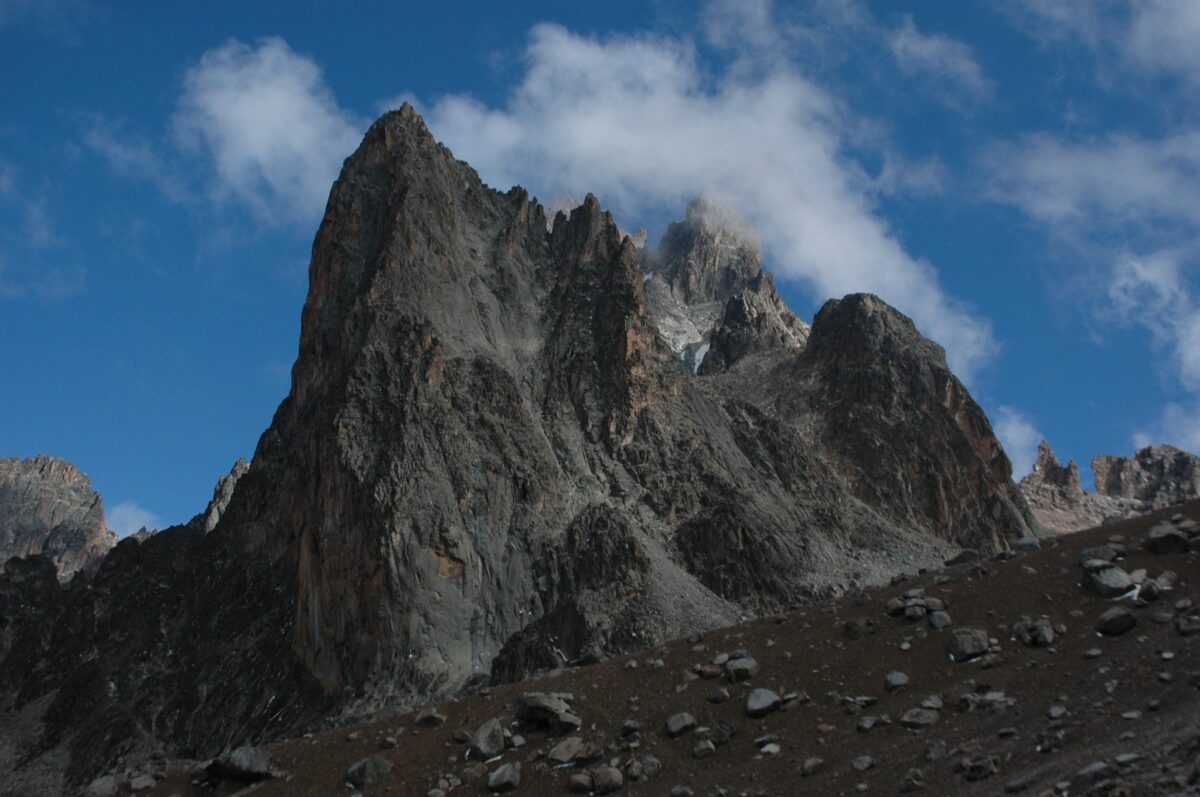
Batian Peak – Mount Kenya Africa second highest point
Geography and Geological Formation
Batian Peak forms part of the ancient volcanic massif of Mount Kenya, an extinct stratovolcano that erupted approximately three million years ago during the formation of the East African Rift System. Scientists believe that Mount Kenya once exceeded 6,500 meters (21,300 feet), making it significantly taller than it is today.
Millions of years of erosion, glaciation, frost action, and weathering gradually carved the mountain into its present form, exposing the hard volcanic core that now forms Batian’s imposing granite cliffs.
The summit rises alongside Nelion Peak (5,188 meters), with the two peaks separated by the famous Gate of the Mists, a narrow notch that presents one of the mountain’s most iconic climbing features. The rugged landscape surrounding Batian includes steep valleys, glaciers, alpine lakes, rock towers, and dramatic cliffs that reflect the mountain’s long geological history.
Why Batian Peak Is Special
Batian is widely regarded as one of Africa’s greatest alpine climbing challenges. Unlike the continent’s highest summit on Mount Kilimanjaro, which is primarily a high-altitude trek, Batian requires technical climbing throughout much of the ascent.
The mountain offers climbers an authentic alpine experience, combining rock climbing, route finding, endurance, and high-altitude mountaineering. Reaching the summit demands careful preparation, teamwork, and respect for changing mountain conditions.
Because relatively few climbers successfully reach Batian each year, the summit retains an exclusive appeal among international mountaineers seeking less crowded but highly rewarding climbing objectives.
Climbing Batian Peak
Ascending Batian is considered a technical expedition rather than a hiking adventure. Most climbing parties begin by trekking through Mount Kenya National Park to reach Austrian Hut, Shipton’s Camp, or another high-altitude base camp before attempting the summit.
The most commonly climbed route is the North Face Standard Route, which consists of multiple rock-climbing pitches involving exposed ridges, chimneys, cracks, and steep granite faces. The climb generally requires:
Technical rock-climbing ability. Rope management skills. Experience with multi-pitch climbing. High levels of physical fitness. Good acclimatization to altitude. Confidence on exposed terrain.
Depending on weather conditions, climbers typically begin the summit attempt before dawn to maximize daylight and reduce the risk of afternoon storms.
Difficulty Level
Batian is regarded as one of Africa’s most technically demanding mountain climbs. While the altitude presents a significant physical challenge, the mountain’s steep granite walls and exposed climbing sections require advanced mountaineering skills.
Unlike trekking routes on Mount Kenya that lead to Point Lenana, Batian involves sustained climbing over rock faces with sections that are rated approximately UIAA Grade IV+ to V (roughly equivalent to 5.6–5.8 in the Yosemite Decimal System), depending on the chosen route and conditions.
Climbers should be comfortable using ropes, harnesses, helmets, climbing shoes, protection equipment, and belay systems.
Because weather conditions can change rapidly, experience in alpine environments is highly recommended.
Best Time to Climb
The most favorable climbing seasons coincide with Kenya’s dry periods, when rock conditions are generally safer and visibility is at its best. and for more adventurer you can pick a 4×4 vehicle for a road-trip Kenya for an Africa Adventure of a lifetime.
The recommended climbing seasons are:
January to March
Late June to October
During these months, climbers are more likely to encounter stable weather, lower precipitation, and clearer summit conditions.
The rainy seasons, typically occurring from April to May and November to early December, often bring wet rock, reduced visibility, and increased climbing hazards.
Wildlife and Scenic Beauty
Although Batian itself rises above the vegetation line, the approach to the summit passes through one of East Africa’s most diverse mountain ecosystems.
Trekkers ascend through dense montane forests inhabited by African elephants, Cape buffaloes, bushbucks, giant forest hogs, black-and-white colobus monkeys, and numerous bird species.
Higher elevations reveal giant lobelias, giant groundsels, alpine moorlands, glacial lakes, waterfalls, and dramatic valleys that make Mount Kenya one of Africa’s most beautiful mountain landscapes.
As climbers approach the upper mountain, the scenery becomes increasingly rugged, with glaciers, granite towers, steep ridges, and panoramic views extending across central Kenya.
The Summit Experience
Standing on Batian Peak is one of the greatest achievements in African mountaineering.
The summit offers breathtaking panoramic views of Mount Kenya’s surrounding peaks, alpine valleys, glaciers, lakes, and forests. On exceptionally clear mornings, climbers can see far across Kenya’s central highlands, while distant volcanic landscapes stretch toward the horizon.
Unlike the crowded summit of Mount Kilimanjaro, Batian offers a quieter and more intimate mountain experience. The sense of accomplishment is heightened by the technical nature of the climb and the effort required to reach Kenya’s highest point.
For experienced mountaineers, the summit represents the successful completion of one of Africa’s finest alpine ascents.
Safety and Preparation
Proper preparation is essential for a successful Batian expedition. Climbers should spend several days acclimatizing to the altitude before attempting the summit to reduce the risk of Acute Mountain Sickness (AMS).
Essential equipment includes:
Climbing helmet.
Harness.
Dynamic climbing rope.
Protective climbing gear.
Mountaineering boots.
Layered clothing for cold alpine conditions.
Waterproof outerwear.
Gloves and insulated hat.
Headlamp.
First aid kit.
Hiring certified mountain guides is strongly recommended, as they possess detailed knowledge of climbing routes, weather patterns, and safety procedures.
Because conditions on Mount Kenya can change rapidly, flexibility and careful decision-making are critical components of every expedition.
Conservation and Environmental Importance Batian Peak lies within Mount Kenya National Park and Forest Reserve, a protected area recognized as a UNESCO World Heritage Site for its exceptional ecological and geological significance
The mountain’s forests form one of Kenya’s most important water catchment systems, supplying rivers that support agriculture, hydroelectric power generation, wildlife habitats, and millions of people.
Conservation efforts led by the Kenya Wildlife Service (KWS) focus on protecting the mountain’s fragile ecosystems through habitat restoration, anti-poaching initiatives, scientific research, sustainable tourism, and environmental education.
Climate change poses a significant threat to Mount Kenya’s remaining glaciers, which have retreated dramatically over the past century. Responsible climbing practices, including Leave No Trace principles, help minimize human impacts on this unique mountain environment.
Why Climb Batian Peak?
Batian offers an exceptional mountaineering experience that combines technical rock climbing, high-altitude adventure, and spectacular scenery. Unlike many famous peaks that attract large crowds, Batian remains relatively quiet, providing climbers with a sense of wilderness and solitude.
For experienced climbers, the mountain offers an ideal challenge that demands skill, endurance, and determination while rewarding every effort with unforgettable landscapes and one of Africa’s finest alpine summits.
Whether motivated by personal achievement, a passion for climbing, or a desire to explore Kenya’s highest mountain, Batian delivers an expedition unlike any other on the continent.
Conclusion
Batian Peak stands as the crowning summit of Mount Kenya and one of Africa’s most prestigious mountaineering objectives. Rising to 5,199 meters, it offers a unique combination of geological significance, technical climbing, alpine beauty, and wilderness adventure that few mountains can match.
From its ancient volcanic origins and rugged granite cliffs to its glaciers, spectacular panoramas, and rich biodiversity, Batian represents the very best of African mountain climbing. While reaching its summit requires advanced skills, thorough preparation, and respect for the mountain’s challenges, those who succeed are rewarded with one of the continent’s most extraordinary achievements.
For mountaineers seeking an authentic alpine adventure beyond traditional trekking routes, Batian Peak remains the ultimate climbing experience on Mount Kenya and one of the finest high-altitude rock climbs in Africa.