
The Cultural Heritage Around Mount Kenya
June 28, 2026Thomson Falls
June 29, 2026The Kikuyu People: Kenya’s Largest Ethnic Group
The Kikuyu, also known as the Agikuyu or Gikuyu, are Kenya’s largest ethnic community, accounting for approximately one-fifth of the country’s population. Predominantly residing in Kenya’s fertile Central Highlands around the slopes of Mount Kenya, the Kikuyu people have played a significant role in shaping the nation’s history, culture, economy, and political development. Renowned for their entrepreneurial spirit, agricultural expertise, and strong cultural traditions, the Kikuyu remain one of East Africa’s most influential communities.
For centuries, the Kikuyu have maintained a close relationship with the land, particularly the fertile volcanic soils surrounding Mount Kenya. Their traditions, beliefs, and way of life have been deeply influenced by the mountain, which they regard as a sacred place and the spiritual home of their Supreme Being. Today, despite rapid urbanization and modernization, the Kikuyu continue to preserve many aspects of their cultural heritage while contributing significantly to Kenya’s economic growth and national identity.
Origins and History
According to Kikuyu oral tradition, the community traces its ancestry to Gikuyu and Mumbi, the founding ancestors created by Ngai, the Supreme God. Tradition holds that Ngai settled Gikuyu and Mumbi at Mukurwe wa Nyagathanga, near the slopes of Mount Kenya, where they established the first Kikuyu homestead. Together, they had nine daughters, whose descendants became the nine principal Kikuyu clans. This origin story remains central to Kikuyu cultural identity and reflects the community’s enduring connection to Mount Kenya.
Historically, the Kikuyu settled in Kenya’s Central Highlands, an area blessed with fertile volcanic soils, reliable rainfall, and abundant rivers flowing from Mount Kenya. These favorable environmental conditions enabled the community to develop a prosperous agricultural society based on crop cultivation and livestock keeping.
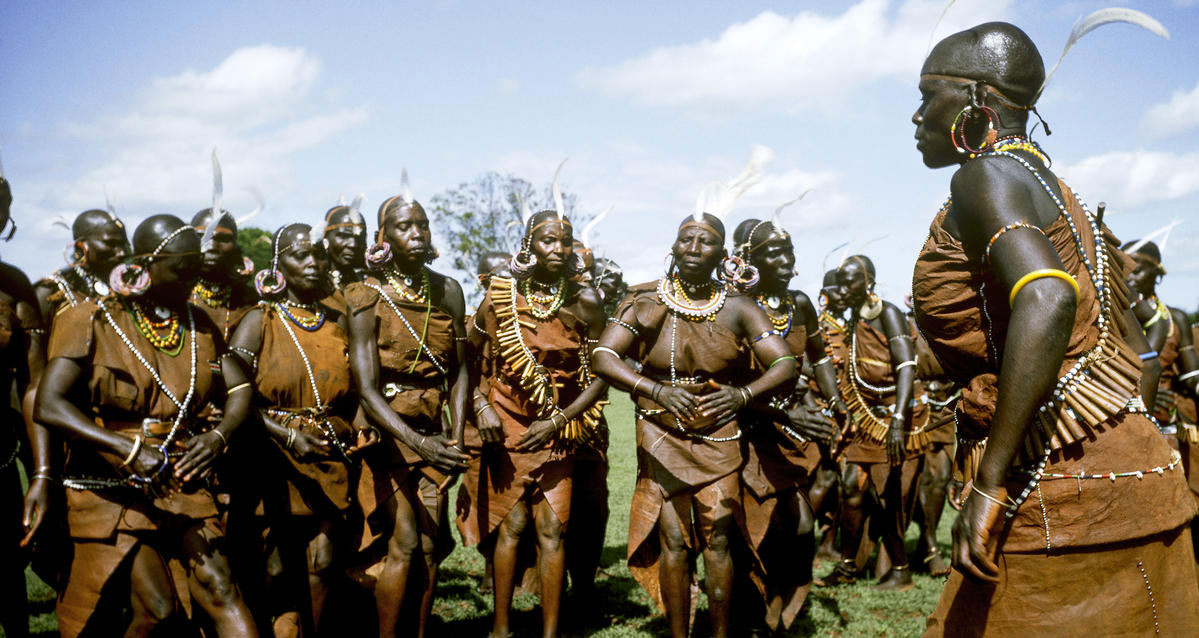
Kikuyu women whose origin is Mount Kenya
During the colonial period, the Kikuyu were among the communities most affected by European land alienation. Large areas of fertile land were taken for colonial settlement, leading to widespread displacement and economic hardship. This loss of ancestral land became one of the key factors behind the Mau Mau Uprising of the 1950s, a nationalist movement in which many Kikuyu fought for Kenya’s independence. The struggle played a pivotal role in ending colonial rule and ultimately led to Kenya’s independence in 1963.
Language of Kikuyu People
The Kikuyu speak Gikuyu, a Bantu language belonging to the larger Niger-Congo language family. Gikuyu remains widely spoken throughout central Kenya and is an important marker of cultural identity. In addition to their native language, most Kikuyu also speak Swahili and English, Kenya’s official languages, enabling them to participate fully in the country’s social, educational, and economic life.
Efforts to preserve the Gikuyu language continue through literature, music, education, and cultural organizations that encourage younger generations to maintain their linguistic heritage.
Traditional Lifestyle
Traditionally, the Kikuyu lived in family homesteads consisting of several huts surrounded by cultivated fields. The community practiced mixed farming, growing crops such as millet, sorghum, yams, beans, bananas, and later maize, while also keeping cattle, goats, and sheep.
Agriculture was more than an economic activity—it formed the foundation of Kikuyu society. Land ownership was highly valued and often passed through family generations. Farming practices emphasized cooperation among family members and neighbors, reinforcing strong community ties.
Traditional Kikuyu society was organized around extended families and clans, with elders playing an important role in governance, conflict resolution, and the preservation of cultural knowledge. Respect for elders remains an important cultural value today, even as lifestyles continue to evolve.
Spiritual Beliefs and Mount Kenya
Mount Kenya, known traditionally as Kirinyaga, meaning “Place of Brightness” or “Mountain of Whiteness,” occupies a central place in Kikuyu spiritual life. The mountain is regarded as the dwelling place of Ngai, the Supreme God, who is believed to watch over the people from its snow-capped peaks.
Historically, Kikuyu homes were constructed with entrances facing Mount Kenya as a sign of reverence. Important prayers, blessings, and ceremonies were also conducted while facing the mountain, symbolizing the community’s spiritual connection to their creator.
Although Christianity is now the dominant religion among the Kikuyu, many traditional beliefs and customs continue to influence cultural practices, particularly during weddings, naming ceremonies, and community celebrations.
Culture and Traditions
Kikuyu culture places strong emphasis on family, hospitality, hard work, and communal responsibility. Storytelling, proverbs, songs, and traditional dances have long served as important methods of passing knowledge and cultural values from one generation to the next.
Music and dance remain central to Kikuyu celebrations, including weddings, harvest festivals, and community gatherings. Traditional instruments such as drums, rattles, and stringed instruments accompany performances that celebrate important milestones and historical events.
The Kikuyu are also known for their craftsmanship, producing woven baskets, wooden carvings, pottery, and handmade tools that reflect generations of artistic skill and practical knowledge.
Agriculture and Economic Contributions
The fertile highlands surrounding Mount Kenya have enabled the Kikuyu to become one of Kenya’s most productive agricultural communities. Today, farmers cultivate coffee, tea, bananas, maize, beans, potatoes, vegetables, avocados, and a wide range of horticultural crops that supply both domestic and international markets.
Coffee and tea production have become especially important sources of income, contributing significantly to Kenya’s export economy. Many Kikuyu farmers also engage in dairy farming, poultry production, and fruit cultivation using modern agricultural techniques alongside traditional knowledge.
Beyond agriculture, the Kikuyu have established a strong reputation for entrepreneurship. Across Kenya, they are active in commerce, manufacturing, finance, transport, construction, education, and professional services such as escorts or potters for trekkers hiking mount Kenya to Batian Peak, making substantial contributions to the country’s economic development.
The Kikuyu in Modern Kenya
Today, the Kikuyu are represented in every sector of Kenyan society. They have produced influential leaders in politics, business, education, academia, sports, and the arts. Many of Kenya’s major urban centers, including Nairobi, have significant Kikuyu populations, reflecting decades of migration in search of education, employment, and business opportunities.
Despite increasing urbanization, many Kikuyu families continue to maintain close ties to their ancestral homes in central Kenya, where cultural traditions, family gatherings, and agricultural activities remain an important part of community life.
At the same time, cultural organizations, museums, and educational programs are helping preserve Kikuyu history, language, music, and customs for future generations.
Conclusion
The Kikuyu are not only Kenya’s largest ethnic group but also one of the country’s most influential cultural communities. From their ancient origins on the slopes of Mount Kenya to their vital role in Kenya’s struggle for independence and modern economic development, the Kikuyu have made lasting contributions to the nation’s identity.
Their enduring connection to Mount Kenya, commitment to agriculture, entrepreneurial spirit, and rich cultural traditions continue to define their place in Kenyan society. For visitors exploring central Kenya, learning about the Kikuyu offers valuable insight into the Kenya cultural heritage and diversity that make Kenya one of Africa’s most fascinating destinations.