
Mount Kenya Africa’s Second Highest Mountain
June 28, 2026Batian Peak
June 28, 2026Mount Kenya National Park,
Kenya’s UNESCO World Heritage Mountain Wilderness
Mount Kenya National Park and Forest Reserve is one of East Africa’s most spectacular protected areas, renowned for its breathtaking mountain landscapes, exceptional biodiversity, rich cultural heritage, and world-class hiking opportunities. Located in central Kenya, approximately 150 kilometers northeast of Nairobi, the park protects Mount Kenya, the country’s highest mountain and the second-highest peak in Africa after Mount Kilimanjaro.
Recognized as a UNESCO World Heritage Site in 1997, Mount Kenya National Park and Forest Reserve is celebrated for its outstanding natural beauty, ecological significance, and importance as one of Kenya’s primary water catchment areas. Covering approximately 715 square kilometers (276 square miles), the national park is surrounded by the much larger Mount Kenya Forest Reserve, creating a vast conservation landscape that safeguards diverse ecosystems ranging from dense montane forests to glaciers near the summit.
Whether visitors come to hike the mountain’s scenic trails, climb its rugged peaks, observe unique wildlife, or experience the traditions of the surrounding communities, Mount Kenya National Park offers one of Africa’s most rewarding nature and adventure destination.
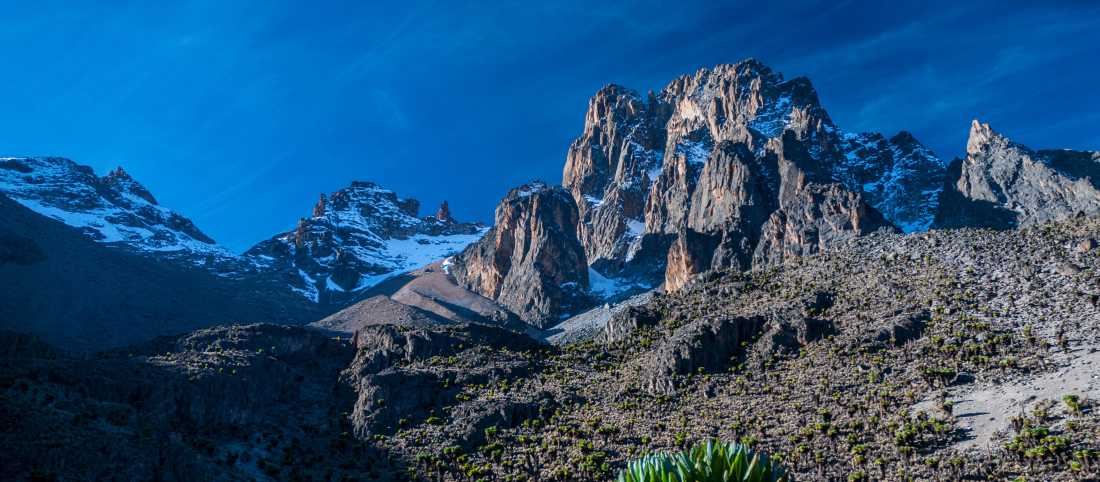
Mount Kenya Hiking to the snow capped summit
A UNESCO World Heritage Site
Mount Kenya National Park was inscribed on the UNESCO World Heritage List in 1997 in recognition of its exceptional ecological value and remarkable mountain scenery. UNESCO acknowledged the park for protecting one of Africa’s finest examples of an extinct stratovolcano, as well as its unique Afro-alpine ecosystems, endemic plant species, and rich biodiversity.
The mountain’s dramatic peaks, glacial valleys, alpine lakes, waterfalls, and extensive forests create one of the continent’s most diverse natural environments. In addition to its ecological significance, Mount Kenya is also one of Kenya’s most important water towers, supplying rivers that sustain millions of people, support agriculture, and generate hydroelectric power across the country.
Today, the park stands as an outstanding example of successful conservation, balancing environmental protection with sustainable tourism and community involvement.
Geography and Geological History
Mount Kenya was formed approximately three million years ago through intense volcanic activity associated with the East African Rift System. During its active period, it is believed to have reached an elevation of more than 6,500 meters before millions of years of erosion and glaciation sculpted the mountain into its present form.
The mountain is characterized by three principal peaks:
Batian (5,199 meters) – the highest peak and a technical climbing destination.
Nelion (5,188 meters) – a challenging granite summit favored by experienced mountaineers.
Point Lenana (4,985 meters) – the most accessible trekking summit and the goal of most hikers.
Deep glacial valleys, dramatic cliffs, tarns, waterfalls, rocky ridges, and alpine lakes testify to the mountain’s glacial history. Although the glaciers have been shrinking over recent decades due to climate change, they remain among the last equatorial glaciers in Africa and continue to define the mountain’s unique landscape.
Diverse Ecosystems
One of Mount Kenya National Park’s most remarkable characteristics is its extraordinary ecological diversity. As visitors ascend the mountain, they pass through several distinct vegetation zones, each supporting specialized plant and animal communities.
Montane Forest
The lower slopes are covered by dense montane forest dominated by cedar, podocarpus, olive, bamboo, and camphor trees. These forests provide critical habitat for elephants, buffaloes, bushbucks, giant forest hogs, monkeys, and numerous bird species.
The forest also functions as one of Kenya’s most important water catchment systems, feeding rivers that support agriculture, industry, and communities throughout central Kenya.
Bamboo Zone
Above the forest lies an extensive bamboo belt, providing shelter for wildlife while preventing soil erosion on the mountain’s steep slopes.
Heath and Moorland
As elevation increases, the vegetation transitions into heath and moorland, where giant heather, everlasting flowers, giant lobelias, and giant groundsels dominate the landscape. These extraordinary plants have evolved remarkable adaptations to survive freezing nights and intense daytime sunlight.
Afro-Alpine Zone
The alpine region features open valleys, volcanic rocks, glacial lakes, and sparse vegetation. This unique environment supports specialized species that thrive under extreme mountain conditions.
Summit Zone
Near the peaks, the landscape becomes a dramatic combination of bare rock, glaciers, snowfields, and ice formations. Temperatures frequently fall below freezing, while oxygen levels are significantly lower than at sea level, creating an environment comparable to high mountain ranges elsewhere in the world.
Wildlife and Biodiversity
Mount Kenya National Park supports an impressive diversity of wildlife despite its high elevation. More than 130 mammal species have been recorded within the park and surrounding forest reserve.
Large mammals include African elephants, Cape buffaloes, bushbucks, black-and-white colobus monkeys, Sykes’ monkeys, giant forest hogs, hyenas, and the elusive leopard. Smaller mammals such as tree hyraxes, duikers, mongooses, and various rodents also inhabit the mountain forests.
The park is equally important for birdlife, with over 250 bird species recorded. Notable species include Hartlaub’s turaco, African crowned eagle, augur buzzard, Jackson’s francolin, scarlet-tufted malachite sunbird, and several endemic high-altitude birds.
The mountain’s exceptional biodiversity makes it one of Kenya’s premier destinations for wildlife enthusiasts, birdwatchers, botanists, and conservation researchers.
Hiking and Mountaineering
Mount Kenya is internationally recognized as one of Africa’s finest trekking and mountaineering destinations. While the technical peaks of Batian and Nelion require climbing experience and specialized equipment, Point Lenana offers an achievable high-altitude objective for hikers without technical climbing skills.
Three primary trekking routes provide access to the mountain:
Sirimon Route – Known for its gradual ascent, excellent acclimatization, and scenic valleys.
Chogoria Route – Widely regarded as the most scenic route, featuring waterfalls, alpine lakes, and dramatic cliffs.
Naro Moru Route – The shortest and most direct approach to Point Lenana, suitable for climbers with limited time.
Most trekking expeditions last between three and five days, allowing visitors to experience the mountain’s diverse ecosystems while gradually acclimatizing to higher elevations.
Reaching Point Lenana at sunrise is considered one of the highlights of East African trekking, offering breathtaking panoramic views across central Kenya and, on exceptionally clear days, distant views toward Mount Kilimanjaro.
Cultural Heritage
Mount Kenya holds profound spiritual and cultural significance for the indigenous communities living around its slopes. The Kikuyu, Meru, and Embu peoples have revered the mountain for centuries, regarding it as a sacred place and an essential source of life.
For the Kikuyu people, Mount Kenya—known traditionally as Kirinyaga, meaning “Place of Brightness”—is believed to be the dwelling place of Ngai, the Supreme Being. Traditionally, homes and places of worship were built facing the mountain as a sign of respect.
Visitors can enhance their experience by participating in community-based cultural tours that showcase traditional farming practices, local cuisine, folklore, handicrafts, music, and dance. These cultural encounters provide valuable insight into the enduring relationship between local communities and the mountain.
Conservation and Environmental Importance
Mount Kenya National Park and Forest Reserve serve as one of Kenya’s most important ecological assets. The mountain supplies water to major rivers, including the Tana and Ewaso Ng’iro systems, which sustain agriculture, hydroelectric power generation, wildlife habitats, and millions of people across the country.
The Kenya Wildlife Service (KWS) manages the national park in collaboration with conservation organizations and local communities to protect its fragile ecosystems. Conservation initiatives include anti-poaching patrols, forest restoration, habitat protection, wildlife monitoring, scientific research, and environmental education.One of the most pressing challenges facing the park is climate change. Mount Kenya’s glaciers have retreated dramatically over the past century, underscoring the need for continued conservation and sustainable resource management.
Why Visit Mount Kenya National Park?
Mount Kenya National Park offers an exceptional combination of adventure, wildlife, culture, and natural beauty. Unlike many of the world’s famous mountain destinations, it provides visitors with uncrowded trails, diverse landscapes, and opportunities to experience both alpine wilderness and authentic Kenyan culture.
Whether hiking to Point Lenana, climbing the technical summits of Batian and Nelion, photographing glacial lakes, observing rare wildlife, or learning about the traditions of the Kikuyu, Meru, and Embu communities, every journey to Mount Kenya is unique and memorable.
The park also serves as an excellent destination for photographers, birdwatchers, botanists, researchers, and travelers seeking a deeper connection with Kenya’s natural heritage.
Conclusion
Mount Kenya National Park and Forest Reserve is one of Africa’s most remarkable protected landscapes. Its towering volcanic peaks, ancient forests, glacial valleys, unique alpine ecosystems, and rich cultural heritage combine to create a destination of global significance. As a UNESCO World Heritage Site, it represents not only Kenya’s highest mountain but also one of the continent’s finest examples of successful conservation and sustainable tourism.
Whether you are an experienced mountaineer pursuing the summit of Batian, a trekker aiming for the sunrise at Point Lenana, or a nature enthusiast eager to explore one of Africa’s most diverse mountain ecosystems, Mount Kenya National Park promises an unforgettable adventure. Its breathtaking scenery, ecological richness, and cultural importance ensure that it remains one of Kenya’s greatest natural treasures and a must-visit destination for travelers from around the world.