
Mountain Kilimanjaro
June 26, 2026The Northern Circuit Route
June 27, 2026The Lemosho Route:
One of the Best Routes to hike Mount Kilimanjaro
The Lemosho Route is widely recognized as one of the finest trekking routes for climbing Mount Kilimanjaro, Africa’s highest mountain at 5,895 meters (19,341 feet). Approaching the mountain from its remote western side, this route is celebrated for its spectacular scenery, diverse ecosystems, excellent acclimatization profile, and high summit success rate. It is an ideal choice for climbers seeking a rewarding trekking experience that combines breathtaking landscapes with a gradual ascent to the summit.
Unlike some of Kilimanjaro’s shorter routes, the Lemosho Route typically takes seven or eight days to complete. This extended itinerary allows trekkers to ascend at a slower pace, giving their bodies more time to adapt to the increasing altitude. As a result, the route consistently records one of the highest summit success rates among all of Kilimanjaro’s established climbing routes. Whether you are a first-time high-altitude trekker or an experienced hiker looking for a scenic adventure, the Lemosho Route offers an excellent balance of challenge, comfort, and adventure.
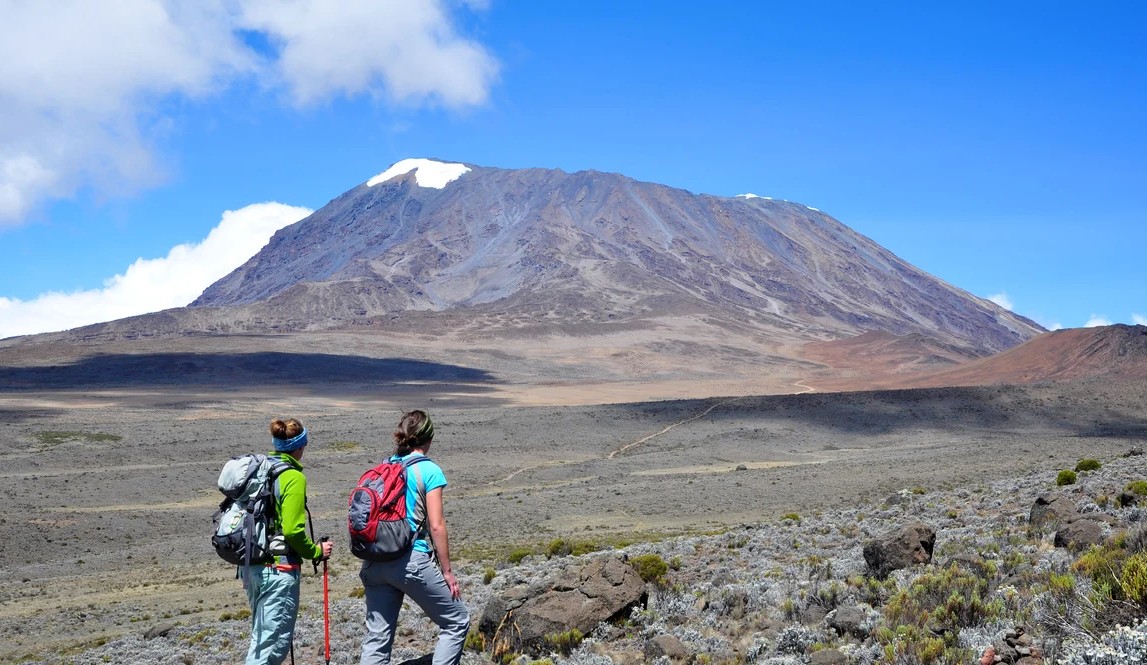
The Lemosho route – Hiking Mount Kilimanjaro – East Africa
Route Highlights
The journey begins on the western slopes of Mount Kilimanjaro in a lush montane rain forest, where towering trees, dense vegetation, and diverse wildlife create an unforgettable introduction to the climb. Trekkers may encounter blue monkeys, colorful bird species, and a variety of unique plant life as they make their way through the forest.
After leaving the rain forest behind, the trail ascends onto the expansive Shira Plateau, one of the world’s highest plateaus and a remarkable geological feature formed by ancient volcanic activity. The plateau offers panoramic views of Kilimanjaro’s peaks and surrounding landscapes, providing one of the most scenic sections of the entire climb.
As the trek continues, climbers join Kilimanjaro’s southern circuit, which is renowned for its dramatic scenery and gradual ascent. Along the way, trekkers pass several iconic landmarks, including the Lava Tower, a volcanic rock formation standing at approximately 4,630 meters (15,190 feet), where many climbers follow the “climb high, sleep low” principle to improve acclimatization.
The route then descends into the picturesque Barranco Valley before tackling the famous Barranco Wall. Although the Barranco Wall appears intimidating, it is a non-technical scramble that requires careful footing rather than climbing expertise. Many trekkers consider this section one of the most enjoyable and memorable parts of the journey due to its spectacular views and sense of accomplishment.
Beyond Barranco, the trail crosses alpine desert terrain before reaching the final high camps, where climbers prepare for the summit attempt. The ascent to Uhuru Peak begins before midnight, allowing trekkers to reach Africa’s highest point at sunrise. Standing on the summit offers breathtaking views of glaciers, volcanic craters, and the vast plains of Tanzania stretching far below.
Acclimatization and Difficulty
The Lemosho Route is generally classified as moderately challenging. It does not require technical mountaineering skills, specialized climbing equipment, or previous climbing experience under normal conditions. However, the greatest challenge is the high altitude rather than the terrain itself.
The route’s seven- or eight-day itinerary provides ample opportunity for gradual acclimatization, significantly reducing the risk of altitude sickness compared to shorter routes. Daily hiking distances are manageable, although several days involve long hours of walking over varied terrain. The most physically demanding stage is the overnight summit push, during which trekkers hike for several hours in cold temperatures and low oxygen levels before reaching Uhuru Peak.
Success on the Lemosho Route depends on maintaining a slow, steady pace, staying well hydrated, and allowing sufficient time for the body to adapt to the elevation. Climbers who follow these principles generally enjoy a higher probability of reaching the summit safely.
Why the Lemosho Route Stands Out
Among Mount Kilimanjaro’s established climbing routes, the Lemosho Route is frequently regarded as the premier option because it combines outstanding scenery, excellent acclimatization opportunities, and a relatively peaceful trekking experience. During the first few days, the trail is noticeably quieter than many of the mountain’s other routes because it begins independently before eventually merging with the Machame Route.
The remarkable diversity of landscapes—from tropical rain forest and heath-covered moorlands to alpine desert and the glacier-capped summit—provides trekkers with an ever-changing and visually stunning journey. Combined with its gradual ascent profile and consistently high summit success rates, the Lemosho Route offers one of the safest, most enjoyable, and most rewarding ways to climb Mount Kilimanjaro.
For climbers seeking an unforgettable adventure that maximizes both their chances of reaching the summit and their opportunity to experience the mountain’s extraordinary natural beauty, the Lemosho Route remains one of the best choices available.
Trekkers seeking total Independence as well as exploring other parts of East Africa can choose to rent a well equipped 4×4 land cruiser with a rooftop tent and discover this unique region which is rich with bio-diversity. you can explore all the three Africa’s highest peaks by adding Mountain Rwenzori also called mountains of the moon in Uganda and Mountain Kenya of course in Central Kenya